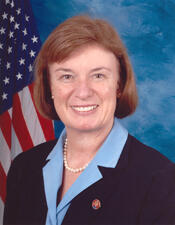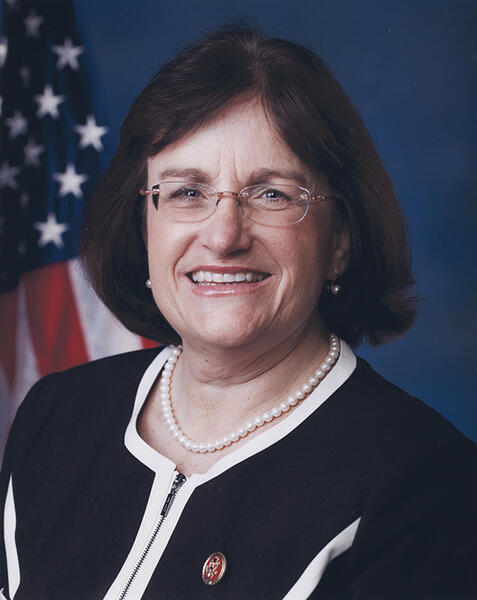
Ann L. McLane Kuster (born September 5, 1956) is an American lawyer and politician who served as the U.S. representative for New Hampshire’s 2nd congressional district from January 3, 2013, to January 3, 2025. A member of the Democratic Party, she served six consecutive terms in the House of Representatives and contributed to the legislative process during a significant period in American history. Over the course of her congressional career, she emerged as a centrist voice within her party and ultimately chaired the New Democrat Coalition, a prominent caucus of moderate and pro-growth House Democrats. On March 27, 2024, Kuster announced that she would not seek re-election to a seventh term in the U.S. House.
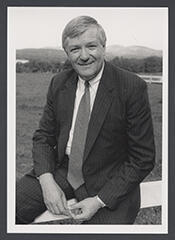
Kuster was born in Concord, New Hampshire, on September 5, 1956, into a family deeply rooted in the state’s political and civic life. Her father, Malcolm McLane, served as mayor of Concord, was a member of the New Hampshire Executive Council, and was an owner of the Wildcat Mountain Ski Area. In 1972 he ran for governor of New Hampshire as an independent, earning 20% of the vote in a three-way race ultimately won by Republican Mel Thomson with 40%. Her mother, Susan McLane, was elected to the New Hampshire Senate as a Republican and became a notable figure in state politics. In 1980, Susan McLane sought election to New Hampshire’s 2nd congressional district, finishing second in a crowded Republican primary with 25% of the vote; Judd Gregg won the nomination with 34%, while Charles Bass—whom Ann Kuster would later defeat in 2012—placed third with 22%. Kuster’s maternal great-grandfather, John McLane, served as governor of New Hampshire from 1905 to 1907, having been elected as a Republican in 1904 with 58% of the vote over Democrat Henry Hollis. This multigenerational political background helped shape Kuster’s early understanding of public service and New Hampshire’s political landscape.
Kuster attended Dartmouth College, where she studied environmental policy and graduated in 1978. She then pursued legal studies at Georgetown University Law Center in Washington, D.C., receiving her Juris Doctor in 1984. Her academic training in environmental policy and law provided the foundation for a career that would blend legal practice, public policy advocacy, and electoral politics. Following law school, she returned to New Hampshire and began practicing law, building expertise in education, nonprofit, and health care policy, as well as adoption law.
After completing her formal education, Kuster became associated with the Concord law firm Rath, Young and Pignatelli, where she served as director of the firm’s education and nonprofit law practice group and later as an “of-counsel” partner. Her legal practice focused on advising educational institutions, nonprofit organizations, and health care entities. She also worked as an adoption attorney, assisting families through the legal process of adoption. Outside her legal practice, Kuster was active in New Hampshire’s civic and philanthropic communities. She served as chair and board member of the Capitol Center for the Arts and was a founder and vice chair of the Women’s Fund of New Hampshire. She also held board positions with the New Hampshire Charitable Foundation, New Hampshire Public Radio, Child and Family Services of New Hampshire, the Alumni Council and Tucker Foundation at Dartmouth College, and Womankind Counseling Center. In addition, she owned and operated Newfound Strategies LLC, a consulting firm that further reflected her engagement in public policy and nonprofit work.
From 1989 to 2009, Kuster worked extensively as a lobbyist in New Hampshire, a role she often described as that of a “public policy advocate.” During this twenty-year period, she earned more than $1.3 million in fees representing a range of businesses and nonprofit organizations before state government. Her clients included Merck Vaccines; the Pharmaceutical Research and Manufacturers of America (PhRMA), with which she helped create the New Hampshire Medication Bridge program, a public-private partnership providing free prescriptions to patients in need; Fidelity Investments, with which she helped establish the New Hampshire UNIQUE College Savings Plan to enable families to save for college tax-free; Dartmouth College and Dartmouth Medical School; NARAL Pro-Choice New Hampshire; Bedford Ambulatory Surgical Center; and the New Hampshire College & University Council. Of her lobbying income, $460,000 came from ambulatory surgical centers, $150,000 from investment companies, and $145,000 from pharmaceutical manufacturers and their association. Her long lobbying career attracted scrutiny; according to OpenSecrets, she received $192,553 in contributions from lawyers and lobbyists during the 2010 election cycle. In 1998, while representing the pharmaceutical manufacturer Hoffman-LaRoche, Inc., she lobbied against HB 1553, a bill that would have reclassified three drugs, including Rohypnol—linked to date rapes, assaults, robberies, and driving offenses—as Schedule I controlled substances, making them illegal to possess. The coordinator of the University of New Hampshire Sexual Harassment and Rape Prevention Program described the rescheduling of Rohypnol as an “imperative,” citing the drug’s serious threat to public health and safety.
Kuster’s formal involvement in national Democratic politics grew in the early 2000s. She served on the New Hampshire steering committee for Senator John Kerry’s 2004 presidential campaign and was a member of the New Hampshire delegation to the 2004 Democratic National Convention in Boston. During the 2007–2008 election cycle, she served on the New Hampshire steering committee for Barack Obama’s presidential campaign and co-chaired New Hampshire Women for Obama alongside Peggo Hodes, wife of Representative Paul Hodes. She was a delegate for Obama at the 2008 Democratic National Convention in Denver. In the 2020 Democratic presidential primaries, she endorsed Pete Buttigieg, breaking a personal streak of supporting candidates who would go on to become the party’s nominee.
Kuster first sought federal office in 2010, running as the Democratic nominee for New Hampshire’s 2nd congressional district. The seat was open because incumbent Democrat Paul Hodes was running for the U.S. Senate. In the general election, she faced Republican former Representative Charles Bass, Libertarian nominee Howard Wilson, and independent candidate Tim vanBlommesteyn. In a closely contested race, Bass defeated Kuster by a margin of 48% to 47%, a difference of 3,550 votes. Undeterred, Kuster ran again in 2012, once more challenging Bass. She received the endorsement of Democracy for America and was selected as one of its “Dean Dozen” priority candidates. On November 6, 2012, she defeated Bass, 50% to 45%. Her victory helped create the first all-female congressional delegation in the nation, with Senator Jeanne Shaheen, Senator Kelly Ayotte, and Representative Carol Shea-Porter joining Kuster in representing New Hampshire at the federal level.
Ann M. Kuster took office in the U.S. House of Representatives on January 3, 2013, representing New Hampshire’s 2nd congressional district, and she would serve six terms until January 3, 2025. During her tenure, she participated actively in the democratic process and represented the interests of her constituents through a period marked by significant national and global challenges, including partisan polarization, debates over health care and economic policy, and the COVID-19 pandemic. She became known as a centrist Democrat and played a leading role in the New Democrat Coalition, ultimately serving as its chair. Her position in this caucus underscored her focus on pragmatic, pro-growth policies and bipartisan cooperation. Throughout her service, she was repeatedly identified as a key incumbent in competitive races and was included in the Democratic Congressional Campaign Committee’s Frontline Program, which is designed to protect vulnerable Democratic incumbents in challenging election cycles.
Kuster consistently secured reelection in a series of competitive campaigns. In 2014, she ran for a second term against Republican State Representative Marilinda Garcia. After a primary in which Republicans including Garcia and former State Senator Gary Lambert sought the nomination, Kuster defeated Garcia in the general election by a margin of 55% to 45%. That year she was a member of the DCCC Frontline Program, reflecting national Democrats’ efforts to defend her seat. The race drew outside attention, including a $30,000 television ad buy by former U.N. Ambassador John Bolton and his super PAC criticizing Kuster’s response to the 2012 attack in Benghazi, Libya. In 2016, she won a third term by defeating Republican former State Representative Jim Lawrence, 50% to 45%. On June 12 of the subsequent cycle, she announced she would seek a fourth term and ran unopposed in the Democratic primary. Four Republicans—Robert Burns, Stewart Levenson, Jay Mercer, and Steve Negron—competed for the chance to face her in the general election, with Negron winning the primary with 27% of the vote. Kuster was reelected over Negron in the general election.
In 2020, Kuster ran for reelection to a fifth term. She defeated Joseph Mirzoeff, her sole Democratic challenger, in the primary and faced a rematch with Steve Negron in the general election. She prevailed with 53.91% of the vote, maintaining Democratic control of the 2nd district. She subsequently won a sixth term in 2022, continuing her service through the 118th Congress. Over these years, Kuster’s work in Congress reflected both her centrist orientation and her longstanding interests in health care, education, and support for families, shaped by her earlier legal and advocacy career. On March 27, 2024, she publicly announced that she would not seek reelection to a seventh term, signaling the end of her congressional tenure at the conclusion of the 118th Congress on January 3, 2025.
Congressional Record