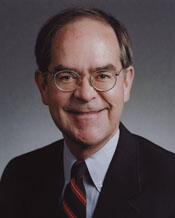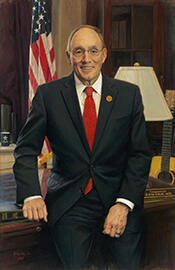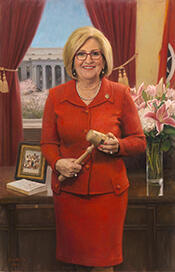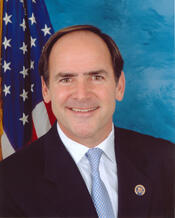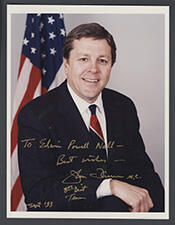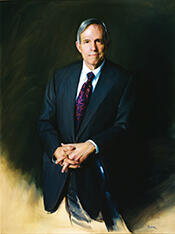
Barton Jennings Gordon (born January 24, 1949) is an American politician and attorney who served as a Democratic Representative from Tennessee in the United States Congress from 1985 to 2011. He represented Tennessee’s 6th congressional district for 13 consecutive terms, a district that includes several rural areas and fast-growing suburbs east of Nashville. Over the course of his tenure, he became known as a moderate Democrat and played a prominent role in science, technology, and energy policy, notably serving as Chairman of the House Committee on Science and Technology from 2007 until 2011. On December 14, 2009, he announced that he would not seek re-election in 2010, concluding more than a quarter-century in the House of Representatives.
Gordon was born in Murfreesboro, Tennessee, where he has lived for most of his life. He came from a family deeply rooted in the region: his father and grandfathers were farmers, and his mother taught in the Rutherford County schools. He attended public schools in Murfreesboro before enrolling at Middle Tennessee State University (MTSU). While at MTSU, he was active in campus life, serving as student body president and joining the Kappa Alpha Order fraternity. He graduated cum laude in 1971. That same year, he began service in the United States Army Reserve, in which he served in 1971 and 1972. Gordon went on to study law at the University of Tennessee College of Law, earning his J.D. degree in 1973, and subsequently returned to Murfreesboro to enter private legal practice.
Even before his election to Congress, Gordon was active in Democratic Party politics in Tennessee. He briefly served as executive director of the Tennessee Democratic Party in 1979 and later as state party chairman from 1981 to 1983. His tenure as chairman coincided with the rise of several prominent Tennessee Democrats, including then-Representative Al Gore. When Gore, who then represented Tennessee’s 6th congressional district, announced in 1983 that he would run for the United States Senate in 1984, Gordon stepped down as state party chairman to seek the open House seat. In the Democratic primary and general election he initially faced a hard-fought race, including opposition from the brother of the publisher of the conservative Nashville Banner. In the November 1984 general election, however, Gordon won handily, benefiting in part from Gore’s popularity even as Ronald Reagan scored a landslide victory in the presidential race.
Gordon took office in January 1985 and went on to represent the 6th district through 13 terms, contributing to the legislative process during a significant period in American history. He was regarded as a moderate Democrat, supporting, among other positions, the repeal of the inheritance tax and the so‑called “marriage tax penalty.” For much of his early congressional career he was re-elected by large margins. His closest race came in 1994, when he narrowly defeated Republican attorney and former University of Tennessee basketball player Steve Gill by a single percentage point amid a strong Republican tide nationally. Gordon defeated Gill more comfortably in a 1996 rematch and was re-elected in 1998 and 2000 by margins similar to those he had enjoyed in the 1980s and early 1990s. After a Democratic-controlled reapportionment in 2002 removed heavily Republican Williamson County from the 6th District and added it to the 7th District, Gordon faced no significant opposition in 2002, 2004, and 2006 and ran unopposed in 2008. The 7th District, which then included Williamson County, was represented from 2003 to 2019 by Marsha Blackburn, who had been Gordon’s well-financed Republican challenger in 1992.
During his congressional career, Gordon served on several key House committees. He was a member of the Committee on Science and Technology from 1985 to 1987 and again from 1997 to 2011, serving as Ranking Member from 2003 to 2007 and as Chairman from 2007 to 2011. In that role, he helped shape federal policy on research, innovation, and technology, and he played a central part in passing major legislation such as the America COMPETES Act and the 2007 Energy Bill. He also served on the Committee on Energy and Commerce from 1995 to 2011, the Committee on the Budget from 1993 to 1995, the Committee on Rules from 1987 to 1995, the Committee on Banking, Finance, and Urban Affairs from 1985 to 1987, and the Permanent Select Committee on Aging from 1985 to 1987. His committee assignments reflected a broad engagement with economic, technological, and social policy.
Gordon’s voting record and public positions highlighted his centrist approach during a period of increasing political polarization. In November 2009 he voted against the Affordable Health Care for America Act, but in March 2010 he voted in favor of both the Patient Protection and Affordable Care Act and the Health Care and Education Reconciliation Act of 2010, supporting the final version of the health care overhaul. In April 2009 he voted against the Matthew Shepard and James Byrd, Jr. Hate Crimes Prevention Act. In December 2008 he drew criticism from some Tennessee conservatives for failing to cast a vote on the federal auto industry bailout; he attributed his non-vote to a “technical glitch” in the electronic voting system. In March 2010 he publicly announced that he would support the Senate health care bill, reinforcing his role in the final passage of health care reform. Beyond legislative matters, Gordon was known on Capitol Hill for his athleticism; for roughly two decades he was recognized as the fastest runner in congressional foot races and, in one notable instance, defeated Representative Aaron Schock—33 years his junior—at the Capital Challenge Charity Race.
Even as Gordon continued to win re-election comfortably, the political complexion of the 6th District shifted markedly in the 1990s and 2000s. The district’s suburban areas around Nashville grew rapidly and trended Republican, while many of the more rural counties gradually shed their traditional “Yellow Dog Democratic” loyalties. The Republican presidential nominee carried the district in both 1996 and 2000, even with Al Gore, a native Tennessean and former 6th District congressman, on the Democratic ticket as vice-presidential nominee in 1996 and as presidential nominee in 2000. The underlying partisan realignment became fully evident after Gordon’s retirement: in the 2010 election to succeed him, Democratic nominee Brett Carter received only 29.3 percent of the vote, barely half the total of Republican State Senator Diane Black. No Democrat has surpassed 30 percent of the vote in the district since Gordon left office.
After leaving Congress in January 2011, Gordon transitioned to a career in law, policy, and international advisory work. He became a partner in the global law firm K&L Gates, focusing on issues at the intersection of public policy, technology, and regulation. He was appointed by President Barack Obama to the U.S. Antarctic Program Blue Ribbon Panel, which traveled to Antarctica in December 2011 to assess the nation’s polar research infrastructure. The panel’s report, issued in July 2012 under the title “More and Better Science in Antarctica Through Increased Logistical Effectiveness,” recommended improvements to support U.S. scientific leadership on the continent. Gordon also became a distinguished fellow at the Council on Competitiveness and joined the Brookings Institution’s Leadership Advisory Board. He has been a project member for the American Academy of Arts and Sciences’ initiative on New Models for U.S. Science and Technology Policy, a board member of the U.S. Association of Former Members of Congress and the Middle Tennessee State University Foundation, and a member of the Board of Counselors for the Center for the Study of the Presidency and Congress. In addition, he is a member of the ReFormers Caucus of Issue One, a bipartisan group of former elected officials advocating for political and campaign finance reforms.
Gordon’s contributions have been recognized both in the United States and abroad. In 2012 he was bestowed the insignia of Officer in the French Legion of Honor, one of France’s highest decorations, reflecting his work in fostering international cooperation in science and technology. That same year he delivered the commencement keynote address at Rensselaer Polytechnic Institute and received an honorary doctorate from the institution. In May 2013, Middle Tennessee State University awarded him the first honorary doctorate in its history, honoring his long record of public service, his advocacy for research and innovation, and his enduring ties to his alma mater and home state.
Congressional Record