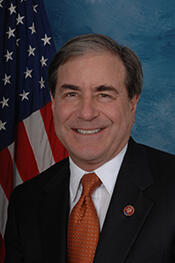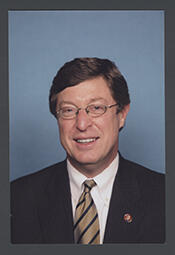
Albert Benjamin Chandler III (born September 12, 1959) is an American lawyer and politician who served as the United States representative for Kentucky’s 6th congressional district from 2004 to 2013. A member of the Democratic Party, he represented a Republican-leaning district for five terms in the U.S. House of Representatives and contributed to the legislative process during a significant period in American history. He is the grandson of A. B. “Happy” Chandler, the two-time Governor of Kentucky, former U.S. Senator, and Commissioner of Baseball, and he previously served as Kentucky’s Attorney General from 1996 until 2004.
Chandler was born in Versailles, Woodford County, Kentucky, on September 12, 1959, the son of Lucie “Toss” (née Dunlap) and A. B. “Ben” Chandler Jr. He grew up in a family deeply involved in public service and Kentucky politics, with his paternal grandfather, Happy Chandler, serving not only as governor and U.S. senator but also as Commissioner of Baseball, a legacy that shaped the younger Chandler’s early exposure to government and public life. This family background provided him with an early understanding of both state and national politics and helped frame his later career in elective office.
Chandler attended the University of Kentucky, where he earned a Bachelor of Arts degree in history, graduating with distinction. He then continued his studies at the University of Kentucky College of Law, receiving his Juris Doctor. Following law school, Chandler entered private legal practice in Lexington, Kentucky. His work as a lawyer in Lexington preceded his entry into elective office and provided him with experience in legal advocacy and the workings of state law that would inform his later roles as a statewide official and member of Congress.
Chandler began his political career at the state level, winning election as Kentucky’s Auditor of Public Accounts (commonly referred to as State Auditor) and serving from 1992 through 1995. In 1995, he successfully ran for Attorney General of Kentucky, winning by a 20-point margin and becoming the nation’s youngest attorney general at the time. He was re-elected as attorney general in 1999 without opposition, serving in that office from 1996 until 2004. As attorney general, Chandler championed Kentucky’s “No Call” list to protect consumers from unwanted telemarketing, collecting thousands of dollars in fines from companies that failed to comply and helping to strengthen federal laws regarding the national “Do Not Call” registry. During his tenure, he also oversaw the recovery of $45 million in charitable assets from one of Kentucky’s largest insurance companies when it converted from non-profit to for-profit status; these funds became the endowment for the Foundation for a Healthy Kentucky, an organization Chandler would later head.
In 2003, Chandler was the Democratic nominee for governor of Kentucky. Running in a politically challenging environment, he was defeated by just over 10 points in a landslide loss to Republican Congressman Ernie Fletcher. Fletcher resigned from Congress to assume the governorship, triggering a special election in February 2004 for Kentucky’s 6th congressional district. Chandler became the Democratic candidate for the open seat and won the special election, defeating state Senator Alice Forgy Kerr by a margin of 55 percent to 43 percent. He took office in 2004 and went on to represent the district in the U.S. House of Representatives until January 2013. Although a Democrat, Chandler’s 6th District was rated “R+9” by the Cook Partisan Voting Index, indicating that a generic Republican would be expected to outperform a generic Democrat there by nine percentage points compared with the national average.
During his congressional service, Chandler developed a reputation as a moderate to conservative Democrat. In its 2010 vote rankings, National Journal rated him at the ideological center of the House of Representatives. He was a member of the Blue Dog Coalition, a caucus of fiscally conservative Democrats, and also belonged to the House New Democrat Coalition. Within the Blue Dogs, he served as chair of the national Blue Dog Task Force on Oversight and Regulatory Review, which examined the thousands of federal regulations issued annually to ensure that congressional intent was followed, to monitor implementation, and to identify and seek modification of rules viewed as overly burdensome to job creation. Chandler signed Americans for Tax Reform’s Taxpayer Protection Pledge, committing to oppose tax increases. Before his appointment to the House Permanent Select Committee on Intelligence, he served on the House Appropriations Committee. His later committee assignments included the Committee on Foreign Affairs, where he sat on the Subcommittee on the Middle East and South Asia, and the Permanent Select Committee on Intelligence, where he served on the Subcommittee on Technical and Tactical Intelligence. He was active in a range of caucuses, including the Healthy Forests Caucus, the Wildlife Refuge Caucus, and several caucuses he co-chaired: the Horse Caucus, the International Conservation Caucus, and the Public Broadcasting Caucus.
Chandler’s voting record reflected both support for key Democratic initiatives and independence from party leadership on major legislation. He voted in favor of the American Recovery and Reinvestment Act of 2009 and the American Clean Energy and Security Act of 2009, as well as for funding the State Children’s Health Insurance Program (SCHIP). At the same time, he opposed several high-profile Democratic-backed measures, including the Troubled Asset Relief Program (the Wall Street bailout), the Dodd–Frank Wall Street Reform and Consumer Protection Act, and the Patient Protection and Affordable Care Act, and he also voted against the Cut, Cap, and Balance Act. In 2011, he voted for the National Defense Authorization Act for Fiscal Year 2012, which contained a controversial provision allowing the government and military to detain certain individuals, including American citizens, indefinitely without trial. His positions occasionally drew criticism, including scrutiny in 2010 for accepting campaign contributions from Representative Charles Rangel’s National Leadership PAC. As a superdelegate in the 2008 presidential election, Chandler endorsed Barack Obama. He also made news in 2009 when he stated he would not hold traditional town hall meetings on health care reform, citing a lack of civility at such forums.
Chandler’s electoral contests in the 6th District were often closely fought. In 2008, his Republican opponent was attorney Jon Larson. In the 2010 midterm elections, he faced Republican nominee Andy Barr in what became one of the nation’s tightest congressional races. Chandler was certified the winner by a margin of 648 votes after a re-canvass, leading Barr by about 600 votes on election night. As the 2012 election approached, Barr characterized their forthcoming contest as “a rematch of the third-closest Congressional race in America,” arguing that Chandler faced considerable dissatisfaction among constituents and the challenge of running on the same ticket as President Obama in a Republican-leaning district. In the 2012 general election, Chandler was again challenged by Barr, with Randolph S. Vance running as a write-in candidate. Barr defeated Chandler by 50.6 percent to 46.7 percent, ending Chandler’s congressional service in January 2013. During his time in office, Chandler’s name was occasionally mentioned as a potential candidate for governor in 2007 and for the U.S. Senate in 2008, but on November 30, 2006, he announced he would not seek the governorship, stating that with rising seniority and a Democratic majority in the House, he believed he could better serve Kentucky in Congress.
After leaving Congress, Chandler remained involved in public policy and civic affairs, including leadership with the Foundation for a Healthy Kentucky, which had been endowed in part through his efforts as attorney general. His career reflects a trajectory from state-level office to national service, shaped by a prominent Kentucky political lineage, a moderate Democratic philosophy, and a record of representing a conservative-leaning district during a period of intense national political polarization.
Congressional Record