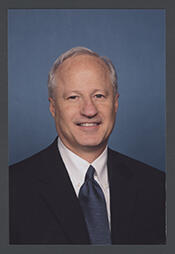
Benjamin Clark Hilliard (January 9, 1868 – August 7, 1951) was an American lawyer, jurist, and politician who served two terms as a U.S. Representative from Colorado from 1915 to 1919 and later became a two-time chief justice of the Supreme Court of Colorado. A member of the Democratic Party during his congressional career, he contributed to the legislative process during a significant period in American history and was long recognized in Colorado for his independent judicial voice.
Hilliard was born in a log cabin eight miles north of Osceola, Iowa, the son of Albert George Hilliard and Euphema Ellen Clark. His father was a farmer who had served as a private in the 37th Illinois Infantry Regiment under Colonel John C. Black during the Civil War, suffering severe wounds that left bullets in his body and destroyed his right eye. His mother, an educated and cultured woman, died in 1881, at which time Hilliard had two siblings. After her death, his father remarried and moved to Kansas, where he died by accidental drowning in 1906. Hilliard attended public schools in both Iowa and Kansas and, before entering the legal profession, taught school in Kansas, an experience that helped shape his early understanding of public service and civic life.
Pursuing a legal education, Hilliard enrolled at the University of Iowa College of Law and graduated in 1891. That same year he was admitted to the bar in Iowa, and in 1892 he was admitted to practice in Missouri. He commenced his legal career in Kansas City, Missouri, before moving west to Denver, Colorado, in 1893, where he was admitted to the Colorado bar that year. His early legal work in Colorado quickly led to public responsibilities. He served as city attorney of Highlands, Colorado, in 1896 and 1897, then as county attorney of Elbert County, Colorado, from 1897 to 1907, and later as county attorney of Grand County, Colorado, from 1909 to 1913. Initially a Republican, Hilliard joined the Democratic Party in 1902, reflecting a shift in his political alignment during the Progressive Era.
Hilliard’s public service extended beyond the courtroom into elective office and local governance. He served as a member of the Colorado House of Representatives in 1902, participating directly in state-level lawmaking. He was also a member of the Denver Board of Education, first from 1900 to 1902, then from 1904 to 1909, and again from 1913 to 1917, demonstrating a long-standing commitment to public education and municipal affairs. Through these roles he gained a reputation as an engaged community leader in Denver and across Colorado, laying the groundwork for his subsequent election to national office.
In 1914, Hilliard was elected as a Democrat to the Sixty-fourth Congress, and he was reelected to the Sixty-fifth Congress, serving in the U.S. House of Representatives from March 4, 1915, to March 3, 1919. As a Representative from Colorado, he participated in the democratic process during a transformative period that included the lead-up to and early years of American involvement in World War I. On April 5, 1917, he cast a notable vote against declaring war on Germany, placing himself among the minority of members who opposed U.S. entry into the conflict. He represented the interests of his Colorado constituents over two terms in office but chose not to be a candidate for renomination in 1918, returning instead to private legal practice after his congressional service concluded.
Following his departure from Congress, Hilliard resumed the practice of law in Colorado and remained an influential figure in the state’s legal community. In 1930 he was elected a justice of the Supreme Court of Colorado, beginning a long tenure on the state’s highest court. Over the course of his judicial career he served multiple times as chief justice, holding that position in 1939, 1940, 1944, 1949, and 1950. Known for his independence of thought, he frequently authored minority opinions, earning the informal title of the state’s “great dissenter.” His judicial work, marked by careful reasoning and a willingness to stand apart from the majority, made a lasting impact on Colorado jurisprudence.
Hilliard was active in professional and civic organizations throughout his career. He was a member of the Denver Civic and Commercial Association and participated in both the Denver and Colorado bar associations, reflecting his engagement with the broader legal and business communities. He was also active in the local Masonic Temple and in his church, underscoring his involvement in fraternal and religious life in Denver. These affiliations complemented his public service and helped sustain his prominence in Colorado civic affairs over several decades.
On May 22, 1889, Hilliard married Tida Zimmerman in Carroll County, Missouri. Her parents, John and Dora Zimmerman, were wealthy farmers who had provided their daughter with a strong education. The couple had four children—two sons and two daughters—and both sons followed their father into the legal profession. The marriage endured for many decades until Tida Hilliard’s death in 1946. In his later years, Hilliard continued to serve on the bench and remained a respected figure in Denver’s legal and civic circles.
Hilliard suffered a heart attack on August 1, 1951, and was taken to St. Luke’s Hospital in Denver. He died there on August 7, 1951, at the age of eighty-three. He was interred in Crown Hill Cemetery in Colorado. His career as a lawyer, legislator, and jurist—spanning from local school boards and county offices to the halls of Congress and the Supreme Court of Colorado—left a significant imprint on the legal and political history of the state.
Congressional Record