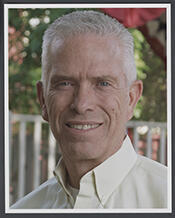
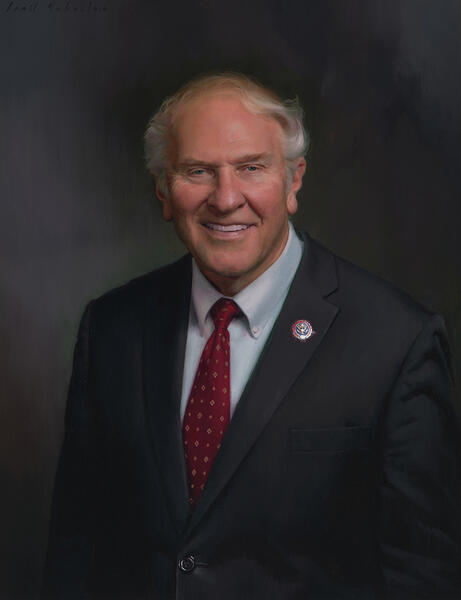
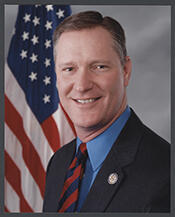
Brad Robert Wenstrup (born June 17, 1958) is an American politician, U.S. Army Reserve officer, and doctor of podiatric medicine who served as the U.S. Representative for Ohio’s 2nd congressional district from 2013 to 2025. A member of the Republican Party, he was elected to six consecutive terms in the House of Representatives, contributing to the legislative process during a significant period in American history and representing the interests of his constituents in southern Ohio. He first won the seat in 2012 after upsetting incumbent Republican Representative Jean Schmidt in the primary, and in November 2023 he announced that he would not seek re-election in 2024, concluding his congressional service at the end of the 118th Congress.
Wenstrup was born and raised in Cincinnati, Ohio, the son of Joan (née Carletti) and Frank John “Jack” Wenstrup. His father was of German, Irish, and English descent, and his mother was of Italian ancestry. He grew up in a Catholic family and has one sister, Amy Castellini. Wenstrup attended St. Xavier High School in Cincinnati, graduating in 1976. He then enrolled at the University of Cincinnati, where he studied psychology and was active in campus life, including membership in the Sigma Alpha Epsilon fraternity. He graduated cum laude in 1980 with a Bachelor of Arts in psychology and was inducted into Omicron Delta Kappa, the national leadership honor society.
Pursuing a career in medicine, Wenstrup attended the Scholl College of Podiatric Medicine, later part of Rosalind Franklin University of Medicine and Science, where he earned both a Bachelor of Science in biology and a Doctor of Podiatric Medicine degree, graduating in 1985. After completing his professional training, he returned to the Cincinnati area and established a podiatric medical practice. Wenstrup practiced podiatric medicine in Cincinnati for more than 24 years before being elected to Congress, building a career focused on foot and ankle care and small business management in the health-care sector.
In addition to his medical career, Wenstrup joined the United States Army Reserve in 1998. He trained as a medical officer and rose steadily through the ranks. In 2005–2006 he served a combat tour in Iraq with the 344th Combat Support Hospital, providing medical care to U.S. and coalition forces and Iraqi civilians. He later described his deployment as “the worst thing that ever happened to me and the best thing I ever got to do,” reflecting both the hardships and the sense of purpose he experienced. During his tour, when his sister asked what she could send him, he replied that while he and his fellow soldiers were adequately supplied, local civilians had almost nothing after years under an oppressive regime. In response, she helped organize donations of toys, school supplies, and hygiene items from companies in the Cincinnati area, which Wenstrup then worked with the base chaplain to distribute to Iraqi families. For his service in Iraq he was awarded the Bronze Star Medal and the Combat Action Badge. He continued his Reserve career after returning home and attained the rank of colonel in March 2017.
Wenstrup’s first bid for public office came in municipal politics. In 2009 he ran for mayor of Cincinnati as a Republican against incumbent Democrat Mark Mallory. Although he lost the race, Mallory’s margin of victory—54 percent to Wenstrup’s 46 percent—demonstrated Wenstrup’s emerging profile in local politics and laid the groundwork for his subsequent congressional campaign. Following the redrawing of Ohio’s congressional districts after the 2010 census, Wenstrup entered the 2012 Republican primary for Ohio’s 2nd congressional district, challenging incumbent Representative Jean Schmidt. Backed by the Anderson Tea Party and the Ohio Liberty Council, a coalition of Ohio Tea Party groups, he ran as a conservative alternative and, in a surprise result, defeated Schmidt in the March primary by a margin of 49 percent to 43 percent. Schmidt carried six counties in the more rural eastern part of the district, while Wenstrup prevailed in the two most populous western counties, Hamilton and Clermont. In the November 2012 general election he defeated Democratic nominee William R. Smith by a vote of 59 percent to 41 percent, securing his first term in Congress.
Taking office in January 2013, Wenstrup began a congressional career that would span six terms, from the 113th through the 118th Congresses. He was reelected in 2014, defeating Democratic nominee Marek Tyszkiewicz by a margin of 66 percent to 34 percent. In 2016 he won a third term, prevailing over Democratic candidates William Smith and Janet Everhard with 65 percent of the vote to their 32.82 percent and 2.17 percent, respectively. In 2018 he secured a fourth term by defeating Democratic challenger Jill Schiller, 58 percent to 41 percent. He won a fifth term in 2020, defeating Democratic nominee Jaime Castle by a margin of 61 percent to 39 percent, and he subsequently won a sixth and final term, continuing to represent Ohio’s 2nd district through 2025. During his tenure, Wenstrup participated actively in the legislative process and committee work, reflecting both his medical and military backgrounds in his policy priorities.
Wenstrup’s service in Congress coincided with a period of intense national and international challenges, including ongoing military operations abroad, debates over health care and veterans’ services, and the COVID-19 pandemic. In 2013 his office conducted a constituent customer service survey that, according to the publication Roll Call, stood out as a “genuine” survey rather than one employing loaded questions. The survey found that 75 percent of respondents were “satisfied” or “very satisfied” with their experience with Wenstrup’s office, underscoring his emphasis on constituent services. In 2016 he joined Representatives Mike Pompeo and Ken Calvert in leading a joint task force that examined U.S. Central Command’s military intelligence assessments regarding forces being trained to fight the Islamic State of Iraq and the Levant (ISIL). The task force’s report faulted Central Command for what it characterized as overly optimistic assessments of the capabilities and progress of those units.
Drawing on his medical expertise and his concern for veterans, Wenstrup was an original co-sponsor of H.R. 3949, the VA Prescription Data Accountability Act of 2017, during the 115th Congress. The legislation, which became law in 2017, expanded the Department of Veterans Affairs’ authority to share prescription data with state prescription drug monitoring programs, helping to protect veterans receiving prescription medications and to prevent misuse of controlled substances. Wenstrup also gained national attention for his actions on June 14, 2017, when a gunman opened fire on Republican members of Congress practicing for the annual Congressional Baseball Game in Alexandria, Virginia. After House Majority Whip Steve Scalise was shot and gravely wounded, Wenstrup, drawing on his combat medical training, provided emergency care at the scene until Scalise could be transported to MedStar Washington Hospital Center. For his actions during the shooting, Wenstrup was awarded the Soldier’s Medal, the U.S. Army’s highest award for heroism outside of combat.
In his later congressional years, Wenstrup played a prominent role in oversight related to the COVID-19 pandemic. He served on the House Select Subcommittee on the Coronavirus Pandemic, where he focused on examining the origins of the virus and evaluating the public health response. On November 9, 2023, he announced that he would not run for re-election in 2024, indicating that he intended to complete his work on the subcommittee before leaving office. As part of that effort, he oversaw the preparation of a comprehensive report titled “AFTER ACTION REVIEW OF THE COVID-19 PANDEMIC: The Lessons Learned and a Path Forward,” which was published on December 4, 2024. Through his combined careers in medicine, military service, and elective office, Wenstrup’s public life has been marked by a consistent focus on national security, veterans’ affairs, health policy, and constituent service.
Congressional Record