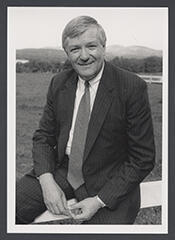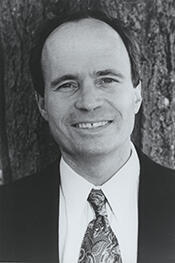
Charles Foster Bass (born January 8, 1952) is an American politician and member of the Republican Party who served as a member of the United States House of Representatives for New Hampshire’s 2nd congressional district from 1995 to 2007 and again from 2011 to 2013. Over seven terms in office, he represented the interests of his constituents during a significant period in American history, contributing to the legislative process as part of the Republican majority that emerged in the mid-1990s. He is the son of Perkins Bass, who also represented the same New Hampshire district from 1955 to 1963, continuing a family tradition of public service that has spanned multiple generations.
Bass was born in Boston, Massachusetts, to Katharine and Perkins Bass. His father, Perkins Bass, served as a Republican U.S. Congressman from New Hampshire in the 1950s and 1960s, representing the 2nd congressional district. His grandfather, Robert P. Bass, served as Republican governor of New Hampshire from 1911 to 1912, was a founder of the Progressive Republican movement in the state, and was known as a friend and confidant of President Theodore Roosevelt. Growing up in this politically active family, Bass was exposed early to public affairs and the workings of government in New Hampshire and Washington, D.C.
Bass attended the Holderness School in Holderness, New Hampshire, where he was elected president of the school in his senior year, an early indication of his leadership interests. He went on to Dartmouth College in Hanover, New Hampshire, graduating in 1974. His education in New Hampshire institutions, combined with his family’s longstanding involvement in state and national politics, helped shape his political outlook and prepared him for a career in public service.
Immediately after college, Bass began working in national politics. In 1974 he served on the staff of Maine Republican U.S. Representative William Cohen. From 1975 to 1979 he worked for another Maine Republican congressman, David F. Emery. These early staff positions in the U.S. House of Representatives provided him with direct experience in legislative operations and constituent service. Returning to New Hampshire, Bass entered elective office and served in the New Hampshire House of Representatives, known as the General Court, from 1982 to 1988. In 1980, after incumbent Republican Congressman James Colgate Cleveland of New Hampshire’s 2nd congressional district decided to retire, Bass entered the Republican primary to succeed him. Then–Executive Councilor Judd Gregg won the primary with 34 percent of the vote; State Senator Susan McLane, the mother of future Congresswoman Ann McLane Kuster, placed second with 25 percent; Bass finished third with 22 percent; and Robert W. Sweet, former deputy executive director of the Domestic Policy Council, came fourth with 7 percent, with five other candidates sharing the remaining 12 percent. Gregg went on to win the general election.
In 1988, Bass successfully sought a seat in the New Hampshire Senate. He defeated incumbent Jean White in the Republican primary and then prevailed over Daniel M. Burnham in the general election. He represented the Peterborough area in the State Senate from 1988 until 1992. During his tenure, he was known as a supporter of tort reform and of some abortion rights, reflecting a more centrist Republican profile. In the same period, Judd Gregg chose not to run for re-election to the U.S. House in 1988, instead successfully running for governor of New Hampshire. Bass did not run to succeed Gregg in Congress at that time; the seat was won by Charles Douglas III, who in turn was defeated in 1990 by Democrat Richard Swett, comfortably re-elected in 1992. Bass left the State Senate in 1992, setting the stage for another bid for federal office.
Bass ran again for New Hampshire’s 2nd congressional district in 1994. In the Republican primary he won with 29 percent of the vote. Mike Hammond came second with 24 percent, Ward Scott was third with 20 percent, attorney and future New Hampshire Supreme Court Justice James P. Bassett was fourth with 14 percent, and businessman Theo de Winter came fifth with 5 percent, with eight other candidates splitting the remaining 8 percent. In the general election, riding the wave of the 1994 Republican Revolution, he defeated incumbent Democrat Richard Swett by 51 percent to 46 percent. As part of that Republican landslide, Bass signed then–House Minority Whip Newt Gingrich’s “Contract With America,” aligning himself with the party’s national reform agenda. He was re-elected in 1996 after defeating Mike Hammond again in the Republican primary, winning 66 percent to Hammond’s 27 percent, with three minor candidates sharing the remainder. In the 1996 general election he secured a second term by defeating former state senator and 1992 gubernatorial nominee Deborah Arnie Arnesen, 51 percent to 44 percent.
Between 1998 and 2004, Bass consolidated his position in the district and was re-elected by increasing margins. In 1998 he defeated Democrat Mary Rauh by 53 percent to 45 percent. In 2000 he won a fourth term against attorney Barney Brannen, 56 percent to 41 percent. In 2002 he defeated Katrina Swett, the wife of former Congressman Richard Swett, by 57 percent to 41 percent. In 2004 he faced a primary challenge from State Representative Mark Brady, whom he defeated by 71 percent to 29 percent. In the 2004 general election he defeated attorney Paul Hodes by 59 percent to 38 percent, which remains the best electoral performance of his congressional career. During these years, Bass developed a reputation as a centrist Republican. He became a member of the Republican Majority for Choice, the Republicans For Choice PAC, and Republicans for Environmental Protection, and he served as a director and former head of the Republican Main Street Partnership, a coalition of centrist Republicans in Congress. In 2005 he was among the first and most vocal House members to call for House Majority Leader Tom DeLay to step aside, and he led the petition drive that resulted in DeLay’s removal from House leadership.
Bass’s political fortunes shifted in the 2006 election cycle. In the Republican primary that year, he won renomination with 75 percent of the vote, defeating Berlin Mayor Bob Danderson, who received 13 percent, and Mary Maxwell, who received 11 percent. In the general election he again faced Democrat Paul Hodes in a rematch of their 2004 contest. Late in the campaign, a staffer in Bass’s Washington, D.C., office resigned after revelations that a U.S. government computer from Bass’s office had been used to post anonymous “concern troll” messages on New Hampshire political blogs under the pseudonym “IndyNH.” The posts purported to be from a discouraged Hodes supporter who claimed Bass’s lead was insurmountable and urged other Hodes supporters to focus on more competitive races. Hodes out-raised Bass financially, and the race, initially seen as leaning Republican, tightened considerably. Early polls showed Bass with leads ranging from seven to twenty-seven points, but as Election Day approached, surveys indicated either a slight Hodes lead or a tossup. On November 7, 2006, Hodes defeated Bass, receiving 53 percent of the vote to Bass’s 45 percent. Bass left Congress in January 2007 after twelve consecutive years of service.
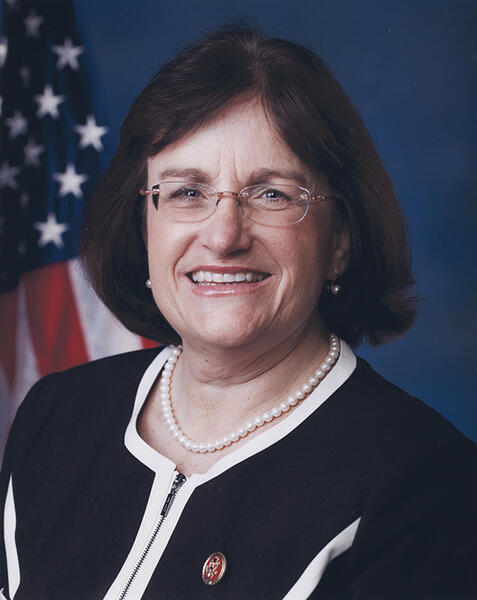
In 2010, with Democrat Paul Hodes declining to seek re-election in order to run for the U.S. Senate, Bass sought to reclaim his former House seat. He won the Republican primary with 42 percent of the vote. Jennifer Horn, the 2008 Republican nominee for the district, came second with 35 percent, State Representative Bob Giuda came third with 17 percent, and two other candidates shared the remaining 5 percent. In the general election Bass faced Democrat Ann McLane Kuster, the daughter of Susan McLane, who had finished ahead of Bass in the 1980 Republican primary for the same congressional seat. Polls initially showed Bass with a wide lead, but the race tightened and Kuster pulled ahead in some late surveys. Despite a national Republican wave in 2010, Bass narrowly defeated Kuster by 3,550 votes, winning 48 percent to her 47 percent, and returned to Congress in January 2011.
Bass ran for re-election in 2012, again seeking to represent New Hampshire’s 2nd congressional district. He easily won the Republican primary with 81 percent of the vote; Dennis Lamare received 9 percent, Will Dean 4 percent, Miroslaw Dziedzic 3 percent, and Gerard Beloin 2 percent. In the general election he faced a rematch with Ann McLane Kuster. Early polling suggested another close contest, but by September Kuster had established a lead that she maintained through the remainder of the campaign. On November 6, 2012, Bass lost to Kuster by 50 percent to 45 percent. His term concluded in January 2013, ending his seven terms and nearly two decades of intermittent service in the U.S. House of Representatives, during which he participated in the democratic process at both the state and national levels and maintained a profile as a moderate Republican voice within his party.
Congressional Record