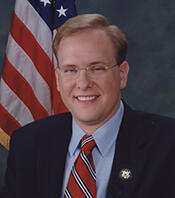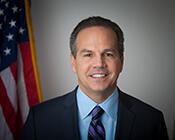
David Nicola Cicilline (sih-sih-LEE-nee; born July 15, 1961) is an American lawyer and politician who served as the U.S. representative for Rhode Island’s 1st congressional district from January 3, 2011, to June 1, 2023. A member of the Democratic Party, he previously served as the 36th mayor of Providence from 2003 to 2011 and was the first openly gay mayor of a U.S. state capital. Over seven terms in the House of Representatives, Cicilline contributed to the legislative process during a significant period in American history, participating in the democratic process and representing the interests of his Rhode Island constituents.
Cicilline was born in Providence, Rhode Island, and raised in a politically engaged family; his father, John F. “Jack” Cicilline, was an attorney who had been active in local politics. He grew up in the Providence area and attended local schools before leaving the state for college. He enrolled at Brown University in Providence, where he studied political science and became involved in campus and community political activities. After earning his undergraduate degree from Brown, he attended Georgetown University Law Center in Washington, D.C., receiving his Juris Doctor and beginning a legal career that combined criminal defense work with increasing involvement in Democratic Party politics.
Before entering elective office, Cicilline practiced law in Rhode Island, working as a criminal defense attorney and gaining experience in trial advocacy and public-interest matters. His early legal career helped establish his reputation as an advocate and positioned him for a run for the state legislature. In 1996, he ran unopposed in the Democratic primary for the Rhode Island House of Representatives from District 4 and was elected in the general election, defeating Republican Michael L. Schein with 2,851 votes to Schein’s 1,642. He quickly became known as a progressive Democrat focused on ethics and government reform. In 1998, he again ran unopposed in both the Democratic primary and the general election. In 2000, Cicilline ran unopposed for a third time in the Democratic primary and, for the second time, faced no opposition in the general election, solidifying his position as a popular state legislator from Providence.
Cicilline sought the mayoralty of Providence in 2002, entering the Democratic primary to succeed acting mayor John J. Lombardi in the wake of the downfall of long-time mayor Vincent “Buddy” Cianci and the federal corruption investigation known as Operation Plunder Dome. He defeated Joseph R. Paolino Jr., Keven A. McKenna, and David V. Igliozzi in the Democratic primary and, in November 2002, was elected mayor in a landslide with 84 percent of the vote. He took office in January 2003 as the 36th mayor of Providence and the first openly gay mayor of a U.S. state capital. In 2006, he defeated Christopher F. Young in the Democratic primary and went on to win an easy reelection with 83 percent of the vote, serving two full terms until 2011.
As mayor, Cicilline focused his administration on strengthening Providence’s residential neighborhoods while continuing the “Renaissance” of downtown and Federal Hill that had begun under Cianci. He promoted the city through tax incentives for artists and film productions and worked to improve relations between city and state government, overcoming the animosity that had characterized earlier administrations. His tenure emphasized urban revitalization, environmental sustainability, and anti-poverty initiatives. Concerned about the Providence metropolitan area’s carbon footprint, he explored the implementation of a streetcar or light rail–type transit system and advanced policies to address housing and foreclosure issues, including passage of a vacant-and-abandoned property penalty to discourage banks from keeping properties off the market and proposals for municipal bonds to purchase foreclosed properties to expand housing opportunities.
Cicilline also became a prominent advocate for youth and after-school programming. As mayor, he served as Chair of the Standing Committee for Children, Health and Human Services of the United States Conference of Mayors and worked with Rhode Island’s Education Partnership to form the Providence After School Alliance (PASA), aimed at expanding access to quality after-school activities. He has served on the board of the national nonprofit Afterschool Alliance, which promotes and supports after-school programs for children nationwide. In 2008, he was president of the National Conference of Democratic Mayors. He was a member of the Mayors Against Illegal Guns Coalition, a bipartisan group co-chaired by Boston Mayor Thomas Menino and New York City Mayor Michael Bloomberg, dedicated to reducing gun violence by getting illegal guns off the streets. In 2009, he served as one of six selection committee members for the Rudy Bruner Award for Urban Excellence, reflecting his engagement with national urban policy and design issues.
During his mayoralty, Cicilline confronted significant fiscal challenges. In May 2009, he gained national attention by proposing a $150-per-semester “head tax” on each of the approximately 25,000 college students attending four universities in Providence as a means of closing $6–$8 million of a reported $17 million city budget shortfall. The Associated Press reported that, if enacted, it would have been the first tax in the nation levied on students simply for being enrolled and attending college within a city’s limits. He also took a prominent role in debates over public safety and morality laws. Between 1980 and 2009, most prostitution had been legal in Rhode Island, and as mayor he became a strong advocate for outlawing it. Cicilline personally testified in Superior Court to prevent the opening of “spas” in Providence and discussed his position in the 2009 documentary “Happy Endings?”. He lobbied for state and local prostitution laws that would allow authorities to arrest sex workers and their customers and to fine landlords who permitted prostitution on their premises. On September 2, 2009, he submitted an ordinance to the Providence City Council to ban indoor prostitution in the city, imposing a $500 fine and a potential 30-day prison sentence on violators. On November 3, 2009, Rhode Island Governor Donald Carcieri signed into law a bill making the buying and selling of sexual services a crime statewide.
In 2010, Cicilline ran for Congress from Rhode Island’s 1st congressional district, a seat being vacated by retiring Representative Patrick J. Kennedy. He was elected and took office on January 3, 2011. As a member of the U.S. House of Representatives, he served during a period marked by partisan polarization, economic recovery efforts following the Great Recession, and major national debates over health care, immigration, civil rights, and technology policy. Over seven terms, he participated actively in the legislative process and became known as a progressive Democrat, an advocate for LGBTQ+ rights, and a strong supporter of gun control, voting rights, and economic fairness. He served on the House Judiciary Committee and the House Foreign Affairs Committee, among other assignments, and was a member of the Congressional Progressive Caucus and the Congressional LGBTQ+ Equality Caucus.
Within the House Judiciary Committee, Cicilline rose to national prominence as chair of the Subcommittee on Antitrust, Commercial and Administrative Law. In this role, he supported efforts to modernize antitrust law, particularly in response to the growing power of large technology companies and digital platforms. He helped lead high-profile investigations into the market practices of major technology firms and advocated for legislative reforms to strengthen competition policy. On September 29, 2022, he was elected chair of the House Foreign Affairs Committee’s Subcommittee on Middle East, North Africa, and Global Counterterrorism, succeeding Representative Ted Deutch, who resigned from the House on September 30, 2022. In November 2022, Cicilline announced that he would run against outgoing Majority Whip James E. Clyburn for the position of Assistant Democratic Leader, the fourth-ranking leadership post in the House Democratic Caucus. He later withdrew his bid for the assistant minority leader position, but the effort underscored his stature within the caucus.
In February 2023, Cicilline announced that he would resign from Congress, effective June 1, 2023, to become president and chief executive officer of the Rhode Island Foundation, one of the nation’s oldest and largest community foundations. His departure from the House ended more than a quarter-century of continuous public service in elective office at the state, municipal, and federal levels. In his new role, he has continued to influence public policy and civic life in Rhode Island through philanthropic leadership, grantmaking, and engagement with nonprofit organizations and community initiatives.
Congressional Record