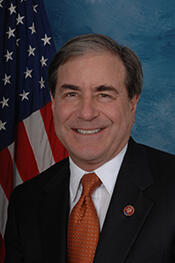
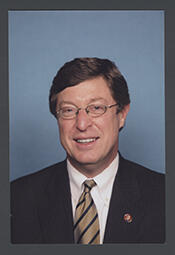
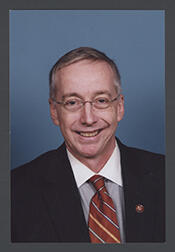
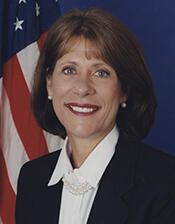
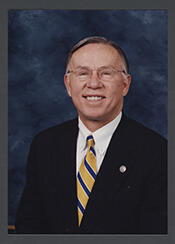
Wayne Edward Whitfield (born May 25, 1943) is an American politician and attorney who represented Kentucky’s 1st congressional district in the United States House of Representatives from January 1995 until his resignation in September 2016. A member of the Republican Party and the first Republican ever to represent the district, he served 11 terms in Congress during a significant period in American history, participating in the legislative process and representing the interests of his western Kentucky constituents. His district covered much of the western part of the state, including Hopkinsville, Paducah, Henderson, and Kentucky’s share of Fort Campbell.
Whitfield was born in Hopkinsville, Kentucky, and his family later moved to Madisonville, Kentucky, where he graduated from Madisonville High School. He first became interested in politics as a high school student and attended his first political event at a rally for former United States Senator Dee Huddleston. He attended the University of Kentucky for both his undergraduate and law degrees, and while there he was elected president of the University Young Democrats Club and was a member of the Delta Tau Delta fraternity. In 1962 he became involved in Edward T. Breathitt’s successful campaign for governor of Kentucky. As a student, he also worked in the Kentucky State Treasurer’s office. After completing his studies at the University of Kentucky College of Law, he pursued further religious and ethical studies at Wesley Theological Seminary in Washington, D.C. Whitfield also served in the United States Army Reserve, attaining the rank of first lieutenant.
Whitfield’s early political career began at the state level. After graduating from law school, he was elected in 1973 to the Kentucky House of Representatives as a Democrat, representing Hopkinsville and parts of Trigg County. He served one term and chose not to seek re-election in 1975, nor did he challenge freshman U.S. Representative Carroll Hubbard in the 1976 Democratic primary. Following his legislative service in Frankfort, he returned to the private sector, focusing on his family’s oil distributorship. In 1979 he entered the transportation industry, joining Seaboard System Railroad in Washington, D.C., as legal counsel to company executives. He later became a vice president of CSX Corporation in two different capacities after Seaboard became part of CSX, gaining extensive experience in regulatory and corporate affairs.
From 1991 to 1993, Whitfield served as legal counsel to the chairman of the Interstate Commerce Commission (ICC), at a time when the Commission was heavily engaged in deregulating the railroad and trucking industries. This role placed him at the center of federal transportation policy during a period of significant economic and regulatory change. His experience in both state government and federal regulatory work helped shape his later focus on energy, commerce, and infrastructure policy in Congress.
Whitfield, who had been a Democrat for most of his life, changed his party affiliation and in 1994 filed to run for Congress in Kentucky’s 1st District as a Republican, a shift that drew comparisons to former Representative Carroll Hubbard, who also changed party affiliation (D then R–KY). He defeated the 1992 Republican nominee, Steve Hamrick, in the primary and went on to unseat freshman Democratic Congressman Tom Barlow in the November 1994 general election by approximately 2,500 votes. He took office in January 1995 as part of the 104th Congress. In 1996 he defeated Democrat Dennis Null even as President Bill Clinton carried the district, and thereafter he never faced a close race, routinely winning re-election and solidifying Republican control of the seat. Over more than 21 years in Congress, Whitfield served on the House Committee on Energy and Commerce, including service on the Subcommittee on Environment and the Economy and the Subcommittee on Health, and he chaired both the Subcommittee on Oversight and Investigations and the Subcommittee on Energy and Power. He was also a member of the moderate Republican Main Street Partnership.
During his congressional service, Whitfield developed a reputation as a conservative who consistently voted anti-abortion and supported allowing students to engage in voluntary school prayer, while also cultivating a record of bipartisanship. The Lugar Center and the McCourt School of Public Policy ranked him as the 43rd most bipartisan member of the U.S. House of Representatives during the 114th Congress, and the most bipartisan House member from Kentucky, based on cross-party co-sponsorship patterns. He placed particular emphasis on energy policy, especially the continued use of coal and nuclear power as anchors for baseload electricity generation to ensure an abundant, affordable, and reliable power supply in the United States. The Sunlight Foundation reported in 2008 that among the 435 House members, Whitfield had the seventh-highest level of investment in oil stocks. He was one of only three Republicans to vote for the Lilly Ledbetter Fair Pay Act in 2009, reflecting occasional departures from party lines on specific issues.
As chairman of the Subcommittee on Oversight and Investigations, Whitfield held hearings on child pornography and other oversight matters. As chairman of the Subcommittee on Energy and Power, he chaired more than 40 hearings on energy issues and became a leading congressional critic of President Barack Obama’s Clean Power Plan, promulgated by the Environmental Protection Agency (EPA) to regulate greenhouse gas emissions from power plants. Whitfield argued that the plan was “extreme” and an “unprecedented power grab,” contending that the administration had failed to consult Congress before issuing regulations that would significantly affect how electricity would be generated in the future. At one of his hearings, Harvard Law School professor Laurence Tribe testified that implementation of the Clean Power Plan would be akin to “tearing up the Constitution of the United States.” In response to EPA proposals, Whitfield introduced the Electricity Security and Affordability Act (H.R. 3826; 113th Congress) on January 9, 2014, to repeal a pending EPA rule that would have established uniform national limits on greenhouse gas emissions from new coal- and natural-gas-fired electricity-generating units and required carbon capture and sequestration technology. He argued that the rule would make it impossible to build new coal-fired plants in the United States. Whitfield also introduced and managed House floor debate on two Congressional Review Act resolutions aimed at overturning Clean Power Plan–related regulations, successfully securing passage of both measures in the House after they had passed the Senate. The Supreme Court later issued an injunction halting implementation of the Clean Power Plan while the U.S. Court of Appeals for the D.C. Circuit prepared to hear oral arguments in a case brought by 27 states opposing the rule.
Beyond energy and environmental regulation, Whitfield’s major legislative accomplishments included the creation of a 170,000‑acre National Recreation Area at Land Between the Lakes in western Kentucky and Tennessee. He also introduced and helped secure passage of a health compensation program for workers at the Paducah Gaseous Diffusion Plant, providing more than $315,000,000 in compensation to 3,139 employees and victims of toxic contamination. He played a role in the development of the first Medicare prescription drug benefit plan for seniors, contributing to one of the most significant expansions of Medicare since its creation. In foreign affairs, Whitfield co-founded the United States–Turkey Caucus in Congress, recognizing Turkey’s strategic importance as the only Muslim-majority nation in NATO. Drawing on conversations with commanding generals of the 101st Airborne Division at Fort Campbell, he sought to build a congressional entity that would support Turkey’s role as a NATO ally.
Whitfield also became a nationally recognized leader on issues involving the humane treatment of animals. He introduced, sponsored, and helped pass several measures to strengthen protections for animals in the United States. His most prominent accomplishment in this area was an amendment effectively banning U.S. horse slaughter for human consumption by prohibiting the Department of Agriculture from spending funds on inspections of horse slaughterhouses, which had supplied horsemeat to some European and Asian markets. Although the ban was later lifted, it had the practical effect of ending the horse-slaughter industry in the United States for a time. He also championed legislation to prohibit the soring of Tennessee Walking Horses, a practice involving the infliction of pain to produce an exaggerated gait. His anti-soring bill attracted the support of 311 House members and 57 senators, but it was never brought to the House floor after an ethics complaint was filed by individuals involved in the walking horse industry who had accumulated a total of 52 violations of the 1970 Horse Protection Act. The House Ethics Committee later issued a report in July 2016 reproving Whitfield for failing to prevent lobbying contacts between his staff and his wife, Connie Harriman Whitfield, who was a lobbyist for the Humane Society of the United States and a supporter of his anti-soring legislation. The committee concluded that his breach was unintentional, but Whitfield stated that the complainants had achieved their goal of stopping his legislation.
On September 29, 2015, Whitfield announced that he would not seek re-election in 2016. Some critics contended that his decision was related to the ethics complaint filed in 2013 by opponents of his horse-soring legislation, although he had been re-elected overwhelmingly after the complaint became public, losing only Marion County in his district. On August 31, 2016, he announced that he would resign his seat effective September 6, 2016, triggering a special election so that his successor could serve during the post–November 8, 2016, lame-duck session of Congress. His departure marked the end of more than two decades of continuous service in the House of Representatives.
Whitfield’s second wife, Connie Harriman Whitfield, has had a substantial public service career of her own. A former attorney at the U.S. Department of Justice, she served as Assistant Secretary of the Interior for Fish, Wildlife and Parks during the administration of President George H. W. Bush. She was also a director of the Export–Import Bank of the United States and was appointed vice chair of the Kentucky Horse Racing Commission by Governor Ernie Fletcher. Following his retirement from Congress, Whitfield remained associated with public affairs in Kentucky. On November 14, 2016, he was presented the Distinguished Rural Kentuckian Award by the Kentucky Association of Electric Cooperatives at a ceremony in Louisville, Kentucky, recognizing his long-standing advocacy for rural communities and electric cooperatives in his home state.
Congressional Record