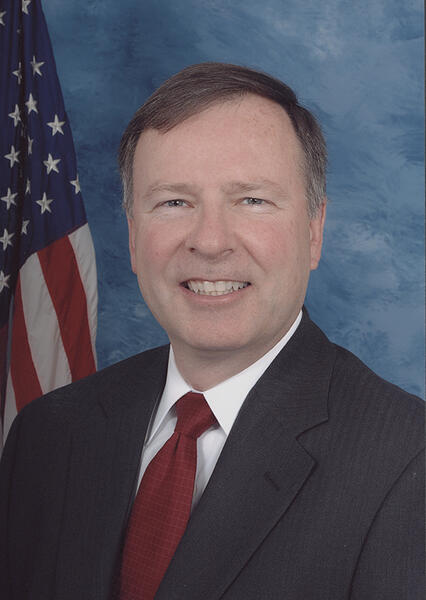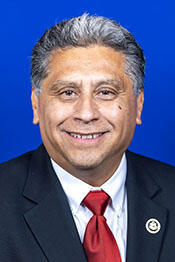
Gregorio Beltran Lopez (born June 7, 1964) is an American politician who served as the U.S. representative for Colorado’s 4th congressional district from 2024 to 2025. A third-generation Mexican American, he was born to a family of farm workers and grew up in Irving, Texas, where his parents and grandparents worked in agricultural labor. His early life in a working-class, agricultural environment shaped his later emphasis on small business development and economic opportunity. Upon graduating from high school, Lopez joined the United States Air Force, beginning a period of military service that would provide both technical training and the educational benefits he later used to pursue higher education.
Lopez served in the United States Air Force from 1983 to 1987 as a weapons specialist stationed at Holloman Air Force Base in New Mexico. In this role, he was responsible for preparing airplanes for flight, working on and around active airfields. His military service ended after he sustained significant hearing loss associated with his airfield duties, leading to his separation from active duty. Utilizing military education benefits, Lopez earned an associate’s degree in business administration from New Mexico State University Alamogordo. In 1988, he and his wife, Lisa, moved from Texas to Colorado, where he began to build a career in local government and public service.
Lopez’s political career in Colorado began at the municipal level. In 1992, at the age of 27, he was elected mayor of Parker, Colorado. At the time of his election he was a Democrat, but he switched to the Republican Party in 1994. He served two terms as mayor, during which he advocated for managed development and growth in Parker, reflecting the town’s rapid expansion and the broader growth pressures in the Denver metropolitan area. In 1998, Lopez sought higher office, running for the open 30th district seat in the Colorado State Senate. He placed fourth in the Republican primary, finishing behind John Evans, Ted Harvey, and Gayle Elton Wintors II, respectively, and did not advance to the general election.
In 2008, Lopez was appointed Colorado director for the U.S. Small Business Administration (SBA), a position he held until 2014. In this role, he oversaw SBA programs and initiatives across the state, working with small businesses, lenders, and community organizations to expand access to capital and federal support. His tenure as SBA Colorado director extended through the aftermath of the 2008 financial crisis, a period in which federal small business programs played a significant role in economic recovery efforts. In 2020, the U.S. Department of Justice pursued a civil case alleging that Lopez had improperly attempted to influence former SBA colleagues years after leaving the agency. The case focused on an email and two phone calls in which he asked a former colleague to look into the status of an open case. Lopez agreed to pay $15,000 to settle the matter.
Lopez repeatedly sought statewide office in Colorado. He announced a campaign for the Republican nomination for the U.S. Senate in 2016, but withdrew before the election. In 2018, he ran for governor of Colorado and placed third in the Republican primary with 13.20 percent of the vote. He again campaigned for the Republican nomination for governor in 2022. During the 2022 campaign, he stated that he wanted to outlaw abortion without exceptions, denied that climate change is man-made, and alleged that the 2020 presidential election was won by Donald Trump and stolen. He lost the 2022 Republican gubernatorial primary to Heidi Ganahl by seven points. In April 2025, following his brief tenure in Congress, Lopez announced yet another candidacy for governor of the state of Colorado.
Lopez’s service in the United States Congress came during a significant period in American political life and was the culmination of his long engagement in public affairs. He was selected as the Republican nominee for the 2024 special election in Colorado’s 4th congressional district, a safely Republican district on the Eastern Plains, after incumbent Representative Ken Buck resigned in March 2024. The Republican nominee for the special election was chosen by a party vacancy committee rather than a primary. Lopez secured the nomination in the sixth round of committee voting, defeating Logan County Commissioner Jerry Sonnenberg by a vote of 51 to 46. Much of his appeal to committee members rested on his willingness to serve as a placeholder candidate; he did not plan to run in the regular primary for a full term. His selection over Sonnenberg, who was running in the regular primary, was widely viewed as a political advantage for Representative Lauren Boebert, who had moved from Colorado’s 3rd district to run in the 4th district’s regular election and thus did not participate in the special election.
Lopez was elected to the United States House of Representatives in the June 25, 2024, special general election. He faced Democratic nominee Trisha Calvarese, Libertarian nominee Hannah Goodman, and Approval Voting nominee Frank Atwood. Owing to the strong Republican lean of the district, he was expected to win by a comfortable margin and did so, taking office as the U.S. representative for Colorado’s 4th congressional district. A member of the Republican Party, Lopez served one term in Congress, from 2024 to 2025. During this period, he participated in the legislative process in the House of Representatives and represented the interests of his constituents in eastern Colorado. He did not run in the general election for a full term, consistent with his earlier positioning as a temporary officeholder in the special election.
Greg Lopez’s congressional service, though brief, was part of a broader career that spanned local government, federal administration, and repeated statewide campaigns. As a third-generation Mexican American who rose from a farmworker family in Texas to become a mayor, federal regional administrator, and member of Congress from Colorado, his career reflected both the opportunities and the contentious political debates of early twenty-first-century American public life.
Congressional Record