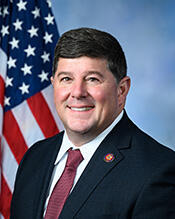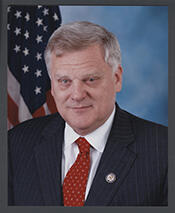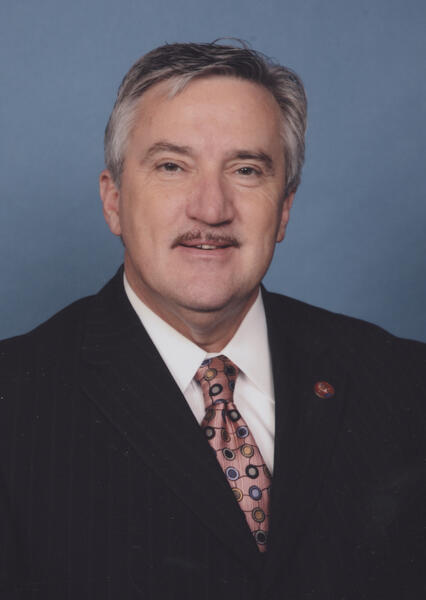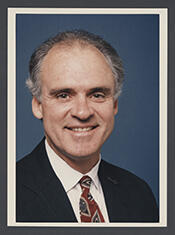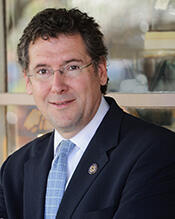
Gregory Livingston Harper (born June 1, 1956) is an American attorney and former politician who served as the U.S. representative for Mississippi’s 3rd congressional district from January 3, 2009, to January 3, 2019. A member of the Republican Party, he represented a district that includes the wealthier portions of the state capital, Jackson, along with most of that city’s suburbs; other major cities in the district include Meridian, Natchez, Starkville, and Brookhaven. During his five terms in the House of Representatives, Harper participated actively in the legislative process and represented the interests of his constituents during a significant period in American political history. In January 2018, he announced that he would retire from Congress and not seek re-election.
Harper was born in Jackson, Mississippi, and raised in the central part of the state. He became involved in Republican politics at the local and state level well before seeking federal office. He spent eight years as chairman of the Rankin County, Mississippi, Republican Party, helping to organize and strengthen the party’s presence in one of the state’s fastest-growing suburban counties. Harper also served as a delegate to the 2000 Republican National Convention and was appointed by the party as an observer during the 2000 Florida presidential recount, a pivotal episode in modern American electoral history.
Harper pursued his higher education in Mississippi. He graduated from Mississippi College in 1978 with a degree in chemistry, reflecting an early interest in the sciences. He then attended the University of Mississippi School of Law, earning his law degree in 1981. Following his admission to the bar, Harper entered private practice as an attorney, a profession he would continue throughout much of his public life. In addition to his private practice, he served as prosecuting attorney for the cities of Brandon, Mississippi, and Richland, Mississippi, gaining experience in municipal law enforcement and local governance.
Building on his legal career and party leadership roles, Harper sought federal office in 2008 when the seat in Mississippi’s 3rd congressional district became open. He won the Republican nomination on April 1, 2008, with 57 percent of the vote in a crowded primary field. Given the district’s strong Republican orientation, this nomination was effectively tantamount to election. In the November 2008 general election, he defeated Democratic nominee Joel Gill with 63 percent of the vote, securing his first term in Congress. He was subsequently re-elected four times, serving a total of five terms from 2009 to 2019.
During his congressional service, Harper held several influential committee assignments and leadership positions. He served on the House Committee on Energy and Commerce, where he worked on issues related to digital commerce, consumer protection, the environment, and the economy, including as vice chair of the Subcommittee on Digital Commerce and Consumer Protection and as a member of the Subcommittee on Environment and Economy. He also served on the Committee on Ethics, which oversees standards of conduct for members of the House. Harper was a member of the Committee on House Administration and ultimately became its chair, where he also led the Subcommittee on Elections. In addition to his formal committee work, he participated in several caucuses, including the Republican Study Committee, the Congressional Arts Caucus, the Veterinary Medicine Caucus, and the U.S.-Japan Caucus, reflecting a range of policy interests from fiscal conservatism to cultural and international issues.
Harper’s legislative record included sponsorship of measures with both partisan and bipartisan support. One of his most notable initiatives was the Gabriella Miller Kids First Research Act (H.R. 2019; 113th Congress), which he introduced in the House on May 16, 2013. The bill, which passed both the House and Senate, ended taxpayer contributions to the Presidential Election Campaign Fund and redirected those funds to the National Institutes of Health to support pediatric research, particularly pediatric cancer research. The legislation provided for a total of $126 million in research funding over ten years; at the time, national political conventions received about 23 percent of their funding from the Presidential Election Campaign Fund. Harper’s work on this bill underscored his interest in medical research and children’s health. His approach to legislating earned him recognition for cross-party cooperation: during the 114th Congress, he was ranked as the 89th most bipartisan member of the U.S. House of Representatives, and the most bipartisan member of the House from Mississippi, according to the Bipartisan Index created by The Lugar Center and the McCourt School of Public Policy.
As chairman of the House Committee on Administration, Harper also played a visible role in institutional oversight and reform. In December 2017, he supported a review of overhauling the Congressional Accountability Act, which governs how workplace complaints, including sexual harassment allegations, are handled in Congress. He stated that such a review was “long overdue,” acknowledging concerns that the existing process made it more difficult for victims of sexual harassment on Capitol Hill to come forward than for those in the private sector. His leadership on this issue reflected a broader effort within Congress to modernize internal procedures and improve accountability.
In his personal and community life, Harper has been active in his church and in advocacy for individuals with developmental disabilities. He is a deacon at Crossgates Baptist Church in Brandon, Mississippi, where he has also served as a Sunday School teacher. Harper and his wife have a son with Fragile X syndrome, a fact that deeply influenced his public service. Drawing on this experience, he helped establish a congressional internship program for students with developmental disabilities through the Mason LIFE Program at George Mason University, providing opportunities for these students to gain work experience on Capitol Hill. After leaving Congress in January 2019, Harper returned to private life and his legal and civic activities, concluding a decade of service in the U.S. House of Representatives while maintaining his engagement in public and community affairs.
Congressional Record