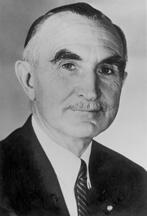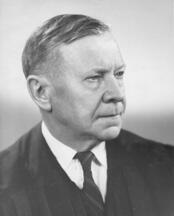
Hall Stoner Lusk (September 21, 1883 – May 15, 1983) was an American jurist and Democratic politician who served as a United States Senator from Oregon from 1960 to 1961. Over a long legal and judicial career, he served in both the Oregon circuit courts and on the Oregon Supreme Court, including a term as chief justice, and later was appointed to the U.S. Senate following the death of Senator Richard L. Neuberger. His brief tenure in Congress came during a significant period in American history, and he participated in the legislative process and represented the interests of his Oregon constituents during his single term in office.
Lusk was born in Washington, D.C., on September 21, 1883, to Charles Rufus Lusk and Florence Speake Lusk. His father was the long-time secretary of the Bureau of Catholic Indian Affairs, and Lusk was raised in the Roman Catholic faith; Mary Ellen Sherman, daughter of Civil War General William Tecumseh Sherman, was his godmother. He attended Georgetown Preparatory School in Washington from 1897 to 1900 and then enrolled at Georgetown University, from which he graduated in 1904. Pursuing a legal career, he studied at Georgetown Law School and earned a bachelor of laws degree in 1907. While completing his legal education, he served as a law clerk to the chief judge of the United States Court of Appeals for the District of Columbia Circuit from 1906 to 1909 and was admitted to the District of Columbia bar in 1907.
In 1909, Lusk moved to Oregon, settling in Portland, where he passed the Oregon bar in 1910 and entered private legal practice. Early in his career he struggled financially and worked in a lumber yard to supplement his income while building his law practice. From 1918 to 1920 he served as an assistant United States Attorney for Oregon, gaining experience in federal litigation. In 1922 he ran unsuccessfully for a seat in the Oregon Legislature as a Democrat. During his years in private practice, he represented the Society of Sisters of the Holy Names of Jesus and Mary and wrote the brief submitted to the United States Supreme Court in the landmark case Pierce v. Society of Sisters, which successfully challenged an Oregon law requiring children to attend public schools and became a significant precedent in the area of parental rights and religious education.
Lusk’s judicial career began in earnest when he was elected circuit judge of Multnomah County, serving from 1930 to 1937. Among the notable matters before him was the widely publicized case involving the Lessards’ harpooning of an orca known as Ethelbert, which had swum up the Columbia River and attracted national attention. The Lessards were charged with killing a fish without using a hook and line, but Judge Lusk directed an acquittal, explaining to the jury that a whale, which breathes air and suckles its young, is not a fish—a decision that was reported in Time magazine. On July 22, 1937, Oregon Governor Charles H. Martin appointed Lusk to the Oregon Supreme Court to fill the vacancy created by the death of Justice James U. Campbell. Lusk was subsequently elected to a full six-year term in 1938 and re-elected in 1944, 1950, and 1956. He served as chief justice of the Oregon Supreme Court from 1949 to 1951, during which time he helped guide the court’s work in a period of postwar legal and social change.
On March 15, 1960, Lusk resigned from the Oregon Supreme Court in order to accept appointment to the United States Senate. The following day, March 16, 1960, Governor Mark Hatfield appointed him as a Democrat to fill the vacancy caused by the death of Senator Richard L. Neuberger. Lusk served in the Senate from March 16, 1960, to November 8, 1960, a period that overlapped with the closing months of the Eisenhower administration and the 1960 presidential campaign. During his eight months in office, he contributed to the legislative process as a member of the Senate and participated in the democratic governance of the nation while representing Oregon’s interests. He did not seek election to a full term and thus concluded his brief service in Congress at the expiration of the appointed term in 1960.
After leaving the Senate, Lusk returned to judicial service in Oregon. In 1961 he rejoined the Oregon Supreme Court as a justice pro tempore, assisting the court on a temporary basis and continuing to influence the state’s jurisprudence. He served in this capacity until 1968. In his later years he remained engaged with the legal community, working on the revision of Oregon Supreme Court procedures as a justice emeritus. He resided in Beaverton, Oregon, while carrying out these responsibilities and remained a respected figure in the state’s legal and political circles.
Lusk’s personal life was closely tied to Portland society and to his Catholic faith. In Portland he met Catherine Emmons, the daughter of a prominent local family who initially opposed the match and sent her on a year-long trip around the world in the hope she would forget him. Their courtship endured, and the couple married on September 30, 1914. They had five children, all daughters. Lusk was a lifelong practicing Roman Catholic, a background that informed both his personal life and his work on cases involving religious institutions and civil liberties.
Hall Stoner Lusk lived to an advanced age, remaining active in legal affairs well into his later years. He died in Beaverton, Oregon, on May 15, 1983, four months short of his 100th birthday. He was interred at Mt. Calvary Cemetery in Portland. His career spanned private practice, federal prosecution, trial and appellate judging, a term as chief justice of the Oregon Supreme Court, and a brief but notable service in the United States Senate, marking him as a significant figure in Oregon’s legal and political history.
Congressional Record