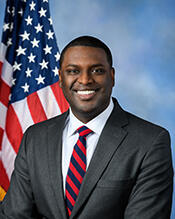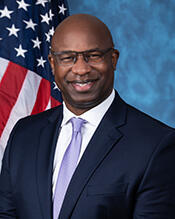
Jamaal Anthony Bowman was born on April 1, 1976, in Manhattan, New York City. During his childhood, he divided his time between living with his grandmother in the East River Houses in East Harlem during the week and with his mother and sisters in Yorkville on the Upper East Side on weekends. After his grandmother’s death when he was eight years old, he lived full time on the Upper East Side. At age 16, he moved with his family to Sayreville, New Jersey, where he attended Sayreville War Memorial High School and played on the football team. These early experiences in public housing, working-class neighborhoods, and suburban New Jersey would later inform his political focus on poverty, racial justice, and public education.
Bowman briefly attended Potomac State Junior College in West Virginia before enrolling at the University of New Haven in New Haven, Connecticut. There he played college football as a linebacker for the New Haven Chargers and earned a Bachelor of Arts degree in sports management in 1999. Deciding not to pursue a career in sports management, he turned instead to education, influenced by a family friend who worked for the New York City Department of Education. While working full time in schools, he continued his own education, earning a Master of Arts in counseling from Mercy College in Dobbs Ferry, New York, in 2006 and a Doctor of Education in educational leadership from Manhattanville College in Purchase, New York, in 2019.
After completing his undergraduate studies, Bowman began his career as an educator in New York City. His first position was as a crisis management teacher in an elementary school in the South Bronx, where he worked with students facing significant academic and social challenges. In 2009, he founded the Cornerstone Academy for Social Action, a public middle school in Eastchester in the Bronx, and served as its principal. At Cornerstone, he implemented a restorative justice model aimed at disrupting the school-to-prison pipeline and strongly advocated for a curriculum that included arts, history, and science alongside literacy and numeracy. He became a prominent critic of high-stakes standardized testing, describing it as a form of “slavery” and arguing in a widely discussed blog that such testing perpetuated inequality, created instability for students and educators, and undermined meaningful instruction. At the school, he curated a “wall of honor” featuring prominent Black, Latino, and Asian figures, including Martin Luther King Jr., Sonia Sotomayor, Cynthia McKinney, Mutulu Shakur, and Assata Shakur. The inclusion of some honorees drew criticism, including charges that he was celebrating controversial figures; his campaign later condemned antisemitic statements by McKinney while defending the educational value of teaching about major figures in Black American history. After a decade as principal, Bowman left Cornerstone Academy to focus on a run for Congress.
Bowman entered electoral politics in 2020, when the progressive group Justice Democrats recruited him to challenge 16-term incumbent Eliot Engel in the Democratic primary for New York’s 16th congressional district, which includes parts of the Bronx and Westchester County. Inspired by the 2018 insurgent campaign of Alexandria Ocasio-Cortez, he ran on an “anti-poverty and anti-racist” platform emphasizing housing, criminal justice reform, education, Medicare for All, and a Green New Deal. His campaign criticized Engel’s foreign policy record and his response to the COVID-19 pandemic. Despite Engel’s substantial fundraising advantage, Bowman gained significant support from progressive organizations and figures, including endorsements from the Sunrise Movement, the New York Working Families Party, Ocasio-Cortez, Bernie Sanders, Elizabeth Warren, and the editorial board of The New York Times. On July 17, 2020, he defeated Engel in the Democratic primary with 55% of the vote, and in the November 2020 general election he won the seat with 84% of the vote, defeating Conservative Party nominee Patrick McManus. He was reelected in 2022 after winning a primary against Westchester County legislator Vedat Gashi, who was backed by Engel, and then prevailing in the general election with 64% of the vote.
Jamaal Bowman served as a Representative from New York in the United States Congress from January 3, 2021, to January 3, 2025, representing New York’s 16th congressional district. A member of the Democratic Party, he contributed to the legislative process during two terms in office, serving during a significant period in American history marked by the COVID-19 pandemic, heightened debates over racial justice, and intense partisan polarization. Upon his swearing-in, he joined the informal group of progressive House Democrats known as “The Squad” and was frequently described as a far-left member of the House Democratic Caucus. He participated in the democratic process as a member of the House Committee on Education and the Workforce, including its Subcommittee on Early Childhood, Elementary, and Secondary Education, and the House Committee on Science, Space, and Technology, where he served as ranking member of the Subcommittee on Energy and also sat on the Subcommittee on Space and Aeronautics. He was a member of the Congressional Black Caucus, the Congressional Progressive Caucus, and the Congressional Ukraine Caucus, and he represented the interests of his Bronx and Westchester constituents through a focus on education, economic inequality, and foreign policy.
Bowman’s legislative record reflected his progressive priorities and his background as an educator. In January 2021, following the January 6 attack on the United States Capitol, he introduced the Congressional Oversight of Unjust Policing Act (COUP Act) to establish a commission to investigate the Capitol Police response and examine potential ties between some officers and white nationalism, citing disparities between the treatment of the January 6 rioters and Black Lives Matter protesters and other marginalized groups. On November 5, 2021, he was one of six House Democrats to vote against the Infrastructure Investment and Jobs Act, arguing that it should not be separated from the broader Build Back Better Act. He was among 51 House Democrats who voted against final passage of the 2022 National Defense Authorization Act, stating that Congress moved “astoundingly” quickly to fund weapons while failing to guarantee housing, care, and robust jobs programs. In 2023, he reintroduced H.R. 4108, the Healthy Future Students and Earth Pilot Program Act, which he had cosponsored in 2021 with Representative Nydia Velázquez, to create a pilot grant program for plant-based food and beverage options in school lunches; although he did not formally cosponsor the bill in the 2023–2024 session, he continued to voice public support for it. He was also among 46 House Democrats who voted against the final passage of the Fiscal Responsibility Act of 2023, reflecting his opposition to the spending and debt-limit compromise.
Foreign policy, and particularly U.S. policy toward Israel, became a central and controversial aspect of Bowman’s congressional career. In September 2021, he voted in favor of providing Israel with an additional $1 billion in aid for its Iron Dome missile defense system, a vote that proved contentious within the Democratic Socialists of America (DSA), of which he was then a member, and prompted internal debate over whether DSA members should be required to support the Boycott, Divestment, and Sanctions movement. His DSA membership lapsed in 2022, and a spokesman confirmed in October 2023 that he had allowed it to expire following criticism of his Iron Dome vote. Over time, Bowman emerged as a frequent critic of U.S. support for Israel, particularly during the 2023–2024 Gaza war. On July 18, 2023, he was one of nine progressive Democrats to vote against a nonbinding resolution declaring that Israel is not a racist or apartheid state, rejecting all forms of antisemitism and xenophobia, and affirming the U.S. commitment to Israel. On October 25, 2023, he joined eight other progressive Democrats and Republican Thomas Massie in voting against a resolution supporting Israel following the October 7 Hamas-led attack. On November 17, 2023, he publicly characterized reports of Israeli women being raped during the Hamas attack as “propaganda” and a “lie”; after additional evidence was presented by the United Nations and inquiries from the press, he retracted those remarks in March 2024 and, in June 2024, apologized, noting that he had voted to condemn sexual violence once further evidence emerged. The liberal pro-Israel group J Street withdrew its endorsement of him on January 29, 2024, citing his framing and approach to the Hamas attack and stating that he had “gone too far.”
Bowman’s tenure in Congress was also marked by a widely publicized disciplinary episode. On September 30, 2023, during efforts by House Democrats to delay a vote on legislation to avert a federal government shutdown, he pulled a fire alarm in the Cannon House Office Building in Washington, D.C., causing the building to be evacuated for approximately ninety minutes. He initially told reporters that he had triggered the alarm by accident, believing it would open a locked door, and his office circulated suggested talking points to allies that repeated this explanation and referred to some Republicans as “Nazis,” a comparison he later said he had not approved. Then-House Speaker Kevin McCarthy and other Republicans accused him of deliberately attempting to delay the vote and called for disciplinary action. After an investigation by the U.S. Capitol Police, Bowman accepted a deal in which he pleaded guilty on October 26, 2023, to the misdemeanor offense of falsely pulling a fire alarm, paid the maximum $1,000 fine, and wrote a letter of apology to the Capitol Police; prosecutors agreed to drop the charge after three months if he complied. He paid the fine, and in January 2024 the charge was dismissed and his guilty plea withdrawn. Nonetheless, on December 7, 2023, the House of Representatives voted 214–191 to censure him for the incident, with three Democrats joining Republicans in support of the censure. Following the vote, the House Ethics Committee terminated its review of his conduct as moot.
In the 2024 election cycle, Bowman sought a third term in Congress but faced a formidable primary challenge centered largely on his stance toward Israel and the Gaza war. He was challenged in the Democratic primary by Westchester County Executive George Latimer, a pro-Israel Democrat. The New York Times described the race as a “marquee showcase” of internal Democratic Party divisions over the Israel–Hamas war. The contest became the most expensive House primary in U.S. history, with approximately $15 million in outside spending supporting Latimer, much of it from groups affiliated with the American Israel Public Affairs Committee (AIPAC) and other pro-Israel organizations. In an effort to consolidate left-wing support, Bowman rejoined the Democratic Socialists of America in May 2024 and received an endorsement from its New York City chapter, even as J Street and other groups withdrew their backing. On primary day, Latimer defeated Bowman by a double-digit margin, 58.59% to 41.41%. Bowman thus became the first member of the Squad, and the first of two Democratic incumbents in the 2024 cycle (along with Cori Bush), to lose a primary, bringing his congressional service to a close on January 3, 2025.
After leaving office, Bowman remained active in progressive politics. In February 2025, he launched a super political action committee, Built to Win PAC, aimed at supporting progressive candidates in competitive races by mobilizing nonwhite voters disillusioned with the Democratic Party. He stated that the PAC would target races involving congressional candidates who supported Israeli Prime Minister Benjamin Netanyahu, as well as those backed by cryptocurrency-focused PACs or real estate lobbyists, though he did not immediately name specific candidates. Through this post-congressional work, Bowman continued to engage in the broader political and ideological debates that had defined his career as an educator-turned-legislator and progressive advocate.
Congressional Record