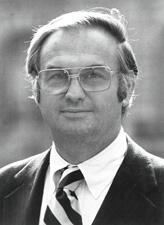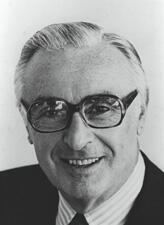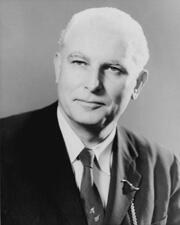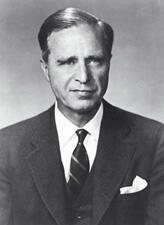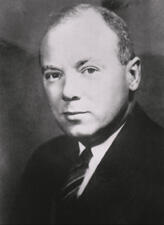
John Anthony Danaher (January 9, 1899 – September 22, 1990) was a United States senator from Connecticut and a United States circuit judge of the United States Court of Appeals for the District of Columbia Circuit. A member of the Republican Party, he served one term in the United States Senate from 1939 to 1945, representing the interests of his Connecticut constituents during a significant period in American history that encompassed the end of the Great Depression and most of World War II.
Danaher was born on January 9, 1899, in Meriden, New Haven County, Connecticut, where he attended the local schools. He pursued higher education at Yale University, receiving an Artium Baccalaureus degree in 1920. During World War I, he served as a lieutenant in the United States Army in 1918 as a member of the Student Army Training Corps and in the Officers’ Reserve Corps, reflecting an early commitment to public service. Following his undergraduate studies, he attended Yale Law School and prepared for a legal career.
Admitted to the bar in 1922, Danaher entered private practice in Hartford, Connecticut, beginning a legal career that would span several decades and later extend to Washington, D.C. From 1922 to 1934, he served as an Assistant United States Attorney for the District of Connecticut, gaining extensive experience in federal law enforcement and litigation. He also entered state public service, serving as Connecticut Secretary of State and as a member of the State Board of Finance and Control from 1933 to 1935. These roles placed him at the center of state governance during the challenging economic conditions of the Great Depression and helped establish his reputation within the Republican Party.
Danaher’s rising profile in state and national Republican politics led to his election to the United States Senate. In the 1938 United States Senate election in Connecticut, he narrowly defeated incumbent Democratic Senator Augustine Lonergan. He took office as a Republican United States senator from Connecticut on January 3, 1939, and served until January 3, 1945. During his one term in office, Danaher participated actively in the legislative process at a time when Congress grappled with issues of economic recovery, national defense, and wartime policy. His service in Congress occurred during a significant period in American history, and as a member of the Senate he took part in the democratic process and contributed to deliberations on the nation’s response to global conflict. He was an unsuccessful candidate for reelection in 1944, concluding his Senate career at the end of his term.
After leaving the Senate, Danaher remained engaged in national Republican politics and the law. He resumed private practice, working in both Hartford and Washington, D.C., from 1945 onward, and served as counsel to the National Republican Senatorial Committee from 1946 to 1953. In that capacity, he advised on legal and political strategy for Republican Senate campaigns, drawing on his own experience as a former senator and federal prosecutor.
Danaher’s judicial career began with his appointment to the federal bench by President Dwight D. Eisenhower. On October 1, 1953, he received a recess appointment to a seat on the United States Court of Appeals for the District of Columbia Circuit, filling the vacancy created by the departure of Judge James McPherson Proctor. He took the oath of office on November 20, 1953. Eisenhower formally nominated him to the same position on January 11, 1954; the United States Senate confirmed his nomination on March 30, 1954, and he received his commission on March 31, 1954. As a judge on one of the nation’s most influential appellate courts, Danaher participated in the adjudication of significant federal questions during a period marked by the expansion of the administrative state and evolving constitutional doctrine.
Danaher assumed senior status on the Court of Appeals for the District of Columbia Circuit on January 22, 1969. After taking senior status, he continued to serve the federal judiciary part time, including service with the United States Court of Appeals for the Second Circuit, thereby maintaining a judicial presence in matters affecting his home region. He took inactive senior status in 1980, effectively concluding his active judicial duties after more than a quarter-century on the federal appellate bench.
In his later years, Danaher resided in West Hartford, Connecticut, where he had lived since 1969. His long career in public service spanned military service, federal prosecution, state office, the United States Senate, and the federal judiciary. He died on September 22, 1990, in West Hartford, Connecticut. His service on the bench formally terminated on that date. He was interred at Sacred Heart Cemetery in his native Meriden, Connecticut. His family’s tradition of judicial service continued through his grandson, John A. Danaher III, who became a Superior Court judge in Connecticut and has served on the bench in Litchfield, Connecticut.
Congressional Record