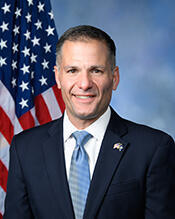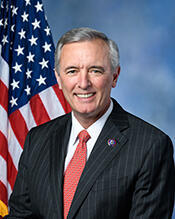
John Michael Katko (born November 9, 1962) is an American attorney and politician who served as a Representative from New York in the United States Congress from 2015 to 2023. A member of the Republican Party, he represented New York’s 24th congressional district, based in Syracuse, for four terms. Over the course of his service in the House of Representatives, Katko participated in the legislative process during a significant period in American history, contributing to bipartisan initiatives and representing the interests of his Central New York constituents.
Katko was born in Syracuse, New York, in 1962 and is of Slovak descent on his father’s side. He grew up in the Syracuse area and graduated in 1980 from Bishop Ludden Junior-Senior High School, a Catholic school in the city. He went on to attend Niagara University, where he earned a Bachelor of Arts degree in political science in 1984. Katko then returned to his hometown to study law, receiving his Juris Doctor from Syracuse University College of Law in 1988, laying the foundation for a career that would combine federal law enforcement and public service.
After law school, Katko first entered private practice at a law firm in Washington, D.C., before moving into federal regulatory and prosecutorial work. He became a senior trial attorney in the Enforcement Division of the U.S. Securities and Exchange Commission, gaining experience in complex financial and securities matters. Katko then joined the U.S. Department of Justice as an Assistant United States Attorney, a role he would hold for roughly two decades. He served as a senior trial attorney on the Mexico–United States border in El Paso, Texas, and was later assigned to San Juan, Puerto Rico, prosecuting narcotics, organized crime, and related federal offenses. In April 2000, a Department of Justice–issued handgun assigned to Katko for his protection after a threat against his life was stolen from his vehicle and later used in a robbery in which two people were killed. A subsequent review reported by The Syracuse Post-Standard found that Katko had broken no state or federal gun laws and that he was not disciplined by the Justice Department.
After his assignments on the border and in Puerto Rico, Katko returned to Central New York and settled in Camillus, a suburb of Syracuse. He continued his federal service as an Assistant United States Attorney in the Northern District of New York, spending about 15 years as a federal organized crime prosecutor in Syracuse. In this capacity, he led the organized crime division at the U.S. Attorney’s Office in Syracuse, focusing on high-level narcotics and gang prosecutions. He was instrumental in formulating the Syracuse Gang Violence Task Force and successfully prosecuting the first-ever Racketeer Influenced and Corrupt Organizations (RICO) gang case in the City of Syracuse, an effort credited with contributing to a significant drop in the city’s violent crime rate. He also prosecuted political and police corruption cases. Katko retired from the Department of Justice in January 2013, concluding a lengthy prosecutorial career that preceded his entry into electoral politics.
Katko entered congressional politics in the 2014 United States House of Representatives elections, challenging incumbent Democratic Representative Dan Maffei in New York’s 24th congressional district. In a race that drew national attention, he was declared the winner on November 4, 2014, with 60 percent of the vote to Maffei’s 40 percent, the largest margin of defeat suffered by an incumbent in the 2014 election cycle. He took office on January 3, 2015. In 2016, Katko ran unopposed in the Republican primary and faced Democratic nominee Colleen Deacon, a former district director for U.S. Senator Kirsten Gillibrand, in the general election. He was reelected with 61 percent of the vote, even as Republican presidential nominee Donald Trump lost the district by four points in the concurrent presidential election. National Democrats viewed the seat as increasingly competitive, particularly after Democratic presidential candidate Hillary Clinton carried the district by four points in 2016, and the 2018 election was heavily targeted as a potential Democratic pickup. In a closely watched contest, Dana Balter won the 2018 Democratic primary over Juanita Perez Williams, 63 percent to 37 percent, but Katko defeated Balter in the November general election with 52.6 percent of the vote. He was reelected again in 2020, defeating Balter in a rematch and securing 53 percent of the vote.
During his four terms in Congress, Katko developed a reputation as a relatively moderate and bipartisan Republican. In the 116th Congress, he served as a co-chair of the Tuesday Group, a caucus of moderate House Republicans, and in the 117th Congress he became the sole chair of its successor organization, the Republican Governance Group. He was also associated with centrist and problem-solving coalitions, including the Republican Main Street Partnership and the bipartisan Problem Solvers Caucus. Katko served on the Committee on Transportation and Infrastructure and the Committee on Homeland Security, and as the ranking member of the Homeland Security Committee he was an ex officio member of all its subcommittees. In 2016, eight bills that he sponsored passed the House, and one became law; he had more bills pass the House that year than any other member of the 61-member freshman class elected in 2014. The Lugar Center ranked him among the most bipartisan members of the House: he was seventh-most bipartisan in the 115th Congress and second-most bipartisan in the 116th Congress. The Center for Effective Lawmaking at Vanderbilt University and the University of Virginia ranked him as the third-most effective House Republican in 2021, and during the 117th Congress he was identified as the third-most bipartisan member of the Republican caucus. Voting analyses indicated that he supported President Trump’s position approximately 75.6 percent of the time, and as of late November 2021 he had supported President Joe Biden’s position about 43 percent of the time.
Katko’s voting record reflected both his conservative positions and his willingness to break with party leadership on high-profile issues. He opposed abortion and stated during his 2014 campaign that he would reverse the Supreme Court’s 1973 Roe v. Wade decision if he could. He voted multiple times to defund Planned Parenthood, explaining that while he had previously favored funding the organization, he changed his stance following the release of controversial undercover videos in 2015; he said he could not support additional funding while investigations into Planned Parenthood’s practices were ongoing, even though subsequent reviews found the claims of illegal fetal tissue sales to be false. At the same time, he voted for H.R. 8373, the Right to Contraception Act, legislation designed to protect access to contraceptives, safeguard health care providers’ ability to provide contraceptives and related information, and provide funding that would include Planned Parenthood. On major national legislation, he voted against the American Rescue Plan Act of 2021, the Biden administration’s COVID-19 relief package, but was one of 13 House Republicans to vote for the Infrastructure Investment and Jobs Act on November 5, 2021.
Katko played a notable role in the congressional response to President Donald Trump’s conduct in office. On December 18, 2019, he voted against both articles of Trump’s first impeachment, joining all 195 voting House Republicans and one Democrat in opposing impeachment. Following the January 6, 2021, attack on the U.S. Capitol, however, Katko became the first House Republican to publicly announce that he would vote to impeach Trump in the second impeachment proceeding. In a statement on January 12, 2021, he blamed Trump’s false claims of widespread election fraud for inciting and encouraging the unlawful attack, faulted the president for failing to promptly and forcefully call off the mob, and warned that failing to hold Trump accountable would pose “a direct threat to the future of our democracy.” He said that as a result of Trump’s actions he could no longer support him. On January 13, 2021, Katko joined nine other Republicans in voting with Democrats to impeach Trump. On February 4, 2021, he was among 11 House Republicans who voted with all voting Democrats to remove Representative Marjorie Taylor Greene from her assignments on the House Education and Labor Committee and the House Budget Committee in response to her controversial and extremist statements. He also supported the creation of an independent, bipartisan commission to investigate the circumstances of the January 6 insurrection.
Katko’s moderate profile and high-profile breaks with much of his party on Trump-related matters and on infrastructure legislation contributed to growing pressure from the right. On January 3, 2022, the New York Independent Redistricting Commission proposed a new congressional map that would combine Ithaca, Syracuse, and Utica into a reconfigured 24th district, a change that could have forced Katko into a primary contest with Representative Claudia Tenney, then representing the 22nd district. On January 14, 2022, Katko announced that he would not seek reelection in 2022, citing a desire to spend more time with his family. At the time of his announcement, he was in line to chair the House Homeland Security Committee if Republicans were to regain the majority in the 2022 elections. Reporting by CNN and other outlets suggested that, in addition to personal considerations, his decision may also have been influenced by the political backlash he faced from some conservatives over his votes to impeach Trump, to support the Infrastructure Investment and Jobs Act, and to back an independent January 6 commission. Katko left Congress at the conclusion of his fourth term on January 3, 2023.
Following his departure from elective office, Katko transitioned to work in the private sector while remaining engaged in public policy. In January 2023, he was named a senior advisor for Hill East Group, a Washington, D.C.–based lobbying and consulting firm. In this role, he has drawn on his experience as a federal prosecutor, his tenure on the Homeland Security and Transportation and Infrastructure Committees, and his record as a bipartisan legislator to advise clients on legislative, regulatory, and homeland security matters.
Congressional Record