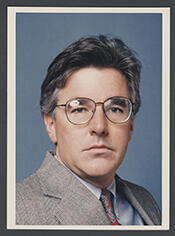
John McConnell Wolfe Jr. (April 21, 1954 – September 4, 2023) was an American attorney and perennial political candidate who became best known nationally for challenging President Barack Obama for the Democratic Party’s 2012 presidential nomination. Over several decades, he sought public office multiple times, most prominently as the Democratic nominee for Tennessee’s 3rd Congressional District in 2002 and 2004, and later as a protest candidate in presidential primaries. A member of the Democratic Party, he ultimately emerged in 2012 as the most successful challenger to an incumbent president, receiving the second-highest number of delegates (23) and popular votes (116,639) in that year’s Democratic primaries.
Details of Wolfe’s early life and education are not extensively documented in public sources, but he trained as an attorney and established a legal career before entering electoral politics. His professional background in law informed his later political campaigns, in which he frequently emphasized issues of economic fairness, government accountability, and the influence of corporate interests on public policy. By the time he began running for federal office, he was already known locally as a practicing lawyer and an outspoken Democrat.
Wolfe’s first major foray into federal electoral politics came in the 2002 race for Tennessee’s 3rd congressional district, a seat based in and around Chattanooga in the eastern part of the state. That year he was the Democratic challenger to incumbent Republican Representative Zach Wamp. Running in a district that had become reliably Republican, Wolfe nonetheless secured the Democratic nomination and mounted a general-election campaign focused on offering an alternative to the incumbent’s conservative record. In the November 2002 general election, he ultimately lost to Wamp.
Undeterred by his initial defeat, Wolfe again sought and secured the Democratic nomination for Tennessee’s 3rd congressional district in 2004. In that race, he once more faced Zach Wamp in the general election. Wolfe lost again, but he was able to garner a greater number of votes than he had in 2002, even though his overall percentage of the vote was smaller, reflecting higher turnout and the entrenched Republican advantage in the district. These consecutive campaigns established him as a persistent Democratic standard-bearer in a difficult political environment.
Wolfe returned to congressional politics in 2010, once more running for Tennessee’s 3rd congressional district. By that time, Zach Wamp had vacated the seat to run for governor, and the open contest drew multiple candidates from both parties. Wolfe faced three other candidates for the Democratic nomination: Alicia Mitchel of Oak Ridge, Brenda Freeman Short of East Ridge, and Brent Staton of Chattanooga. Several other prospective Democratic candidates had withdrawn prior to the primary, including Tom Humphrey, Paula Flowers of Oak Ridge (a former member of Governor Phil Bredesen’s cabinet), and Brent Benedict, who had been the 2006 Democratic nominee for the 3rd district. Wolfe secured the Democratic nomination but ultimately lost in the November 2010 general election to Republican Chuck Fleischmann by a margin of 57 percent to 28 percent.
Wolfe achieved his greatest national visibility during the 2012 presidential election cycle. Running as a Democratic challenger to incumbent President Barack Obama, he entered several state Democratic primaries as a protest candidate, criticizing what he viewed as the administration’s insufficiently progressive stance on economic and financial issues. Despite limited funding and organization, he attracted notable pockets of support from disaffected Democratic voters. In the course of the 2012 Democratic primaries, Wolfe ultimately emerged as the most successful challenger to Obama, receiving the second-highest number of delegates—23 in total—and 116,639 popular votes nationwide. His performance, while not a threat to the president’s renomination, drew attention to internal party dissent and the role of protest candidacies in modern primary politics.
Wolfe continued to engage in presidential politics after 2012. In November 2015, he filed for the Arkansas presidential primary, again positioning himself as a Democratic alternative focused on economic populism and reform. Across the various primary contests in which he competed, he consistently ran as an underdog, using his campaigns to highlight issues he believed were neglected by party leaders and to give voice to voters dissatisfied with the direction of national policy.
Throughout his adult life, Wolfe resided in Chattanooga, Tennessee, the principal city of the congressional district he repeatedly sought to represent. He never married and had no children, devoting much of his public life to law and politics. John McConnell Wolfe Jr. died on September 4, 2023, at the age of 69, leaving a record as a determined, if frequently unsuccessful, candidate who used the electoral arena to advance his views and challenge party orthodoxy.
Congressional Record