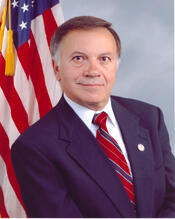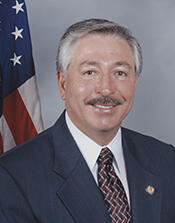
John Tony Salazar (born July 21, 1953) is an American politician and public servant who represented Colorado’s 3rd congressional district in the United States House of Representatives from January 3, 2005, to January 3, 2011. A member of the Democratic Party, he served three terms in Congress during a period of significant national political change and later held statewide executive office as Commissioner of the Colorado Department of Agriculture in the Cabinet of Governor John Hickenlooper. His career has been marked by a focus on rural issues, agriculture, and the interests of western Colorado.
Salazar was born in 1953 in Colorado and grew up in a large family on a ranch in the San Luis Valley, a predominantly agricultural region in southern Colorado. Raised in a rural, Spanish-speaking household, he was part of a family that would become prominent in Colorado and national politics; his younger brother, Ken Salazar, later served as a United States senator from Colorado and as U.S. Secretary of the Interior. The family’s livelihood in farming and ranching, and their deep roots in the region, shaped John Salazar’s early understanding of water rights, land use, and agricultural policy, themes that would recur throughout his public life.
Educated in Colorado, Salazar’s formative years combined work on the family ranch with schooling that prepared him for both business and public service. His early adult life continued to center on agriculture and small business in the San Luis Valley, where he gained firsthand experience with the economic challenges facing rural communities. This background informed his later political identity as a moderate Democrat attentive to the concerns of farmers, ranchers, and small-town constituents.
Before his election to Congress, Salazar built a reputation in Colorado as a community leader and advocate for rural interests. He was active in local and regional affairs, where his work on agricultural and water issues helped establish his credibility among voters in western and southern Colorado. By the early 2000s, this record positioned him as a viable candidate to succeed retiring Republican Representative Scott McInnis in Colorado’s 3rd congressional district, a vast and politically competitive district encompassing much of the state’s Western Slope and rural areas.
Salazar was first elected to the United States House of Representatives in the 2004 election, one of the most closely watched House races of that year. Running to succeed McInnis, he faced Republican Greg Walcher in a hard-fought contest. Walcher attacked Salazar as being soft on illegal immigration, while Salazar criticized Walcher for his prior support of a failed 2003 referendum that Salazar argued would have diverted water away from the district, a critical issue in water-scarce western Colorado. In a national election cycle in which Republicans made gains in many areas, Salazar’s victory stood out; he captured one of only three Democratic pick-up seats in the House of Representatives that year, underscoring both the competitiveness of the race and his appeal as a candidate.
During his three terms in Congress from 2005 to 2011, Salazar participated actively in the legislative process and represented the interests of his constituents in Colorado’s 3rd district. He cultivated a reputation as a moderate, middle-of-the-road Democrat, often emphasizing bipartisan cooperation and pragmatic solutions to issues affecting rural communities, including agriculture, water management, veterans’ affairs, and economic development. In the 2006 election, he was re-elected by a substantial margin, defeating Republican Scott Tipton, who would later return to challenge him again. Salazar raised almost three times as much campaign funding as Tipton and won over 60 percent of the vote, including in traditionally more Republican areas of the district, reflecting his broad support and the effectiveness of his moderate message.
Salazar secured a third term in the 2008 election, again winning by a margin similar to his 2006 victory. That year he defeated Wayne Wolf, a rancher and county commissioner, in another race that highlighted his strength among rural voters. Salazar enjoyed a massive fundraising advantage over Wolf, who had only about $16,000 for his campaign, and he continued to present himself as a centrist Democrat focused on the practical needs of his district. Throughout his congressional service, he remained closely identified with the concerns of western Colorado, including the protection of water resources, support for agricultural producers, and the promotion of economic opportunities in small communities.
In the 2010 election cycle, amid a national shift toward Republican candidates, Salazar was defeated for re-election by Republican Scott Tipton, the same opponent he had decisively beaten in 2006. The race also included Libertarian candidate Gregory Gilman and Independent candidate Jake Segrest on the ballot, with Independents John W. Hargis Sr. and James Fritz qualifying as write-in candidates. Salazar’s loss ended his tenure in the House on January 3, 2011, after three consecutive terms representing Colorado’s 3rd congressional district.
Following his electoral defeat in 2010, Salazar continued his public service at the state level. In 2011, he was appointed Commissioner of the Colorado Department of Agriculture by Governor John Hickenlooper, joining the governor’s Cabinet. In this role, Salazar oversaw state agricultural policy and programs, drawing on his lifelong experience in farming and ranching and his legislative background to address issues such as market access for Colorado producers, water and land-use policy, and the economic vitality of rural communities. He served as Agriculture Commissioner until announcing his retirement from the position in November 2014. Through both his congressional service and his tenure in state government, John Tony Salazar has been closely associated with the representation and advancement of Colorado’s rural and agricultural interests.
Congressional Record