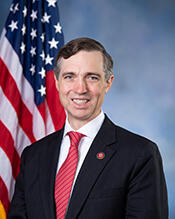
Michael Clifton Burgess (born December 23, 1950) is an American physician and politician who represented Texas’s 26th congressional district in the United States House of Representatives from January 3, 2003, to January 3, 2025. A member of the Republican Party and a conservative aligned with the Tea Party Caucus, he served 11 consecutive terms in Congress. The 26th district, which he represented throughout his tenure, is anchored in Denton County, a rapidly growing suburban county north of Dallas and Fort Worth in North Texas.
Before entering politics, Burgess pursued a long career in medicine as a doctor of obstetrics and gynecology. Trained as a physician, he practiced obstetrics and gynecology for many years, delivering thousands of babies and operating a private medical practice. His professional background in health care later shaped much of his legislative focus, particularly on health policy and medical regulation, and gave him a reputation in Congress as a member with practical experience in the health sector.
Burgess entered electoral politics in 2002, when the retirement of Representative Dick Armey, then House Majority Leader, opened the seat in Texas’s 26th district. In the Republican primary, he faced Scott Armey, the outgoing congressman’s son, in a closely watched contest. Burgess defeated Scott Armey in a primary runoff election, securing the Republican nomination and subsequently winning the general election. He took office in January 2003, beginning a congressional career that would span more than two decades and encompass major national debates over health care, energy, and federal spending.
During his years in the House of Representatives, Burgess was consistently reelected by substantial margins. He won approximately 66 percent of the vote in 2004, about 60 percent in both 2006 and 2008, 67 percent in 2010, and 68 percent in 2012. In 2014, for the first time in his congressional career, he did not draw a Democratic challenger; facing only nominal Libertarian opposition, he won nearly 84 percent of the vote. Burgess secured his eighth term in 2016 with 211,730 votes (66.4 percent), defeating Democratic nominee Eric Mauck, who received 94,507 votes (29.6 percent), and Libertarian candidate Mark Boler, who received 12,843 votes (4 percent). In 2018 he won a ninth term with 185,268 votes (59.4 percent), defeating Democratic nominee Linsey Fagan, who polled 121,584 votes (39 percent), while Boler, again running as a Libertarian, received 5,008 votes (1.6 percent). Burgess was elected to a tenth term in 2020 with 261,963 votes (60.6 percent), defeating Democratic nominee Carol Iannuzzi, who received 161,009 votes (37.3 percent), and Boler, who received 9,243 votes (2.1 percent). He declined to seek a 12th term during the 2024 election cycle and retired from Congress at the conclusion of his 11th term in 2025.
In Congress, Burgess was regarded as a reliably conservative Republican. He was a member of the congressional Tea Party Caucus and, through 2011, held a lifetime rating of 93.59 percent from the American Conservative Union. He signed Americans for Tax Reform’s Taxpayer Protection Pledge, committing to oppose increases in federal income tax rates and to resist efforts to broaden the tax base without corresponding rate reductions. His voting record and public positions reflected a strong emphasis on limited government, lower taxes, and reduced federal regulation.
Burgess’s committee assignments placed him at the center of key policy debates. He served on the Committee on Energy and Commerce, one of the House’s most influential panels, where he sat on the Subcommittee on Health, the Subcommittee on Digital Commerce and Consumer Protection, and the Subcommittee on Oversight and Investigations. These roles allowed him to engage directly with legislation affecting the health care system, consumer protection, and regulatory oversight. He also served on the Committee on Budget and the Committee on Rules, including the Subcommittee on Legislative and Budget Process, giving him a voice in shaping federal budget priorities and the procedures governing House floor action.
Health care policy was a central focus of Burgess’s congressional career. Drawing on his medical background, he became deeply involved in debates over health care reform, including the passage and subsequent efforts to repeal or modify the Affordable Care Act (Obamacare). He supported the repeal of the Affordable Care Act and advocated for market-oriented reforms to the health care system. He opposed abortion and consistently supported legislation to restrict or regulate abortion procedures. Burgess also took positions on energy and environmental policy, expressing uncertainty about the extent of human contribution to global warming and favoring approaches that emphasized energy development and economic growth.
Burgess’s tenure in Congress coincided with a period of significant political and social change in the United States, including the wars in Iraq and Afghanistan, the Great Recession, the enactment and controversy surrounding the Affordable Care Act, and the polarized political climate of the 2010s and early 2020s. He supported President Donald Trump’s restrictions on travel from several Muslim-majority countries and on refugee immigration, aligning with the administration’s approach to national security and immigration policy. Throughout his 11 terms, he participated in the legislative process, represented the interests of his North Texas constituents, and played a prominent role in Republican health policy discussions until his retirement from the House of Representatives in 2025.
Congressional Record