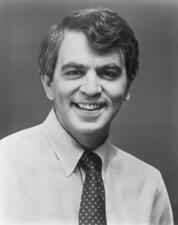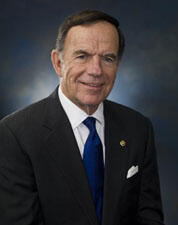
Paul Grattan Kirk Jr. (born January 18, 1938) is an American lawyer and politician who served as a United States Senator from Massachusetts from 2009 to 2010, having been appointed to fill the vacancy created by the death of Senator Edward M. “Ted” Kennedy. A member of the Democratic Party, he contributed to the legislative process during one term in office. Kirk was born in Newton, Massachusetts, one of five children of Josephine Elizabeth (née O’Connell) and Judge Paul G. Kirk Sr., an associate justice of the Supreme Judicial Court of Massachusetts. His father was of Irish and English descent and his mother was of Irish ancestry, and he is a great-nephew of Cardinal William O’Connell. He later became the brother-in-law of ice hockey player and coach Bill Cleary.
Kirk was educated in the Boston area, attending The Roxbury Latin School and graduating from St. Sebastian’s School in 1956. He went on to Harvard College, from which he graduated in 1960, and then to Harvard Law School, earning his law degree in 1964. While in college he participated in the Reserve Officers’ Training Corps program, receiving his commission as a second lieutenant in the United States Army in 1960. He served on active duty for six months to complete his initial training and then remained in the United States Army Reserve until 1968, when he was discharged with the rank of captain. Kirk was admitted to the Massachusetts bar in 1965, beginning a legal career that would intersect closely with Democratic politics at the state and national levels.
Kirk’s early professional career combined law practice with political service. He became a special assistant to Senator Ted Kennedy in 1969, a position he held until 1977, working closely with the Massachusetts senator during a formative period in Kennedy’s Senate career. In private practice, Kirk became affiliated with the Boston law firm Sullivan & Worcester LLP, where he was a partner from 1977 to 1990. He later became chairman and chief executive officer of Kirk & Associates, Inc., a Boston-based business advisory and consulting firm. Over the years he also developed extensive corporate and nonprofit board experience, serving on the boards of the Hartford Financial Services Group, Inc., Rayonier, Inc., and Cedar Realty Trust, Inc., and previously as a board member of ITT Corporation from 1989 to 1997 and Bradley Real Estate, Inc. from 1991 to 2000.
Kirk rose to national prominence within the Democratic Party in the 1980s. In 1983 he became treasurer of the Democratic National Committee, and in 1985 he was elected chairman of the DNC despite opposition from Virginia Governor Chuck Robb and a group of southern Democrats who went on to form the Democratic Leadership Council. As DNC chair from 1985 to 1989, he briefly stirred controversy when he suggested means testing for Social Security, a remark he quickly withdrew. Under his leadership, the Democratic Party regained control of the United States Senate in the 1986 midterm elections, ending a Republican majority that had been in place since 1980. During his tenure he also promoted and executed a successful plan for the party to take over the planning of presidential debates, a role that helped lead to the establishment and institutionalization of the Commission on Presidential Debates. Kirk resigned as DNC chairman following Republican Vice President George H. W. Bush’s victory over Massachusetts Governor Michael Dukakis in the 1988 presidential election and was succeeded by Ron Brown. From 1992 to 2001 he served as chairman of the National Democratic Institute for International Affairs, further extending his influence in democratic development and election processes abroad.
Beyond formal party leadership, Kirk remained active in Democratic presidential politics. On May 2, 2008, he formally pledged his superdelegate vote at the 2008 Democratic National Convention to Barack Obama. He later supported Senator Bernie Sanders in the 2016 Democratic presidential primaries. In addition to his political and legal work, Kirk has been deeply involved in civic, educational, and institutional governance. He served as co-chairman of the Commission on Presidential Debates, chairman of the board of directors of the John F. Kennedy Library Foundation, and a member of the board of directors of the Edward M. Kennedy Institute for the United States Senate. He has been a trustee of Stonehill College and served as a trustee of St. Sebastian’s School from 1992 to 2004 and again from 2006 to 2009. He is a past chairman of the Harvard Board of Overseers Nominating Committee and has chaired the Harvard Overseers Committee to Visit the Department of Athletics.
Kirk’s appointment to the United States Senate occurred during a significant period in American history, amid contentious national debate over health care reform and the balance of power in the Senate. In August 2009, Senator Ted Kennedy died, leaving a vacancy in the Massachusetts Senate delegation. Five years earlier, in 2004, the Massachusetts General Court had removed the governor’s authority to fill U.S. Senate vacancies by appointment, instead requiring a special election, a change enacted over Governor Mitt Romney’s veto. That law, which Senator Kennedy had personally urged Democratic legislative leaders to pass, was intended to prevent a Republican governor from appointing a successor to Democratic Senator John Kerry had Kerry won the 2004 presidential election. After Kennedy’s death, Democrats in Washington faced the loss of a 60‑vote supermajority needed to end filibusters, particularly on health care legislation. Kennedy had requested before his death that state law be revised to allow an interim appointment so that Massachusetts would have full representation until a special election could be held. In September 2009, the General Court passed legislation restoring the governor’s power to make such interim appointments, again over bipartisan concerns about political inconsistency.
It was reported that Kennedy’s sons, Representative Patrick J. Kennedy and Edward Kennedy Jr., and his widow, Victoria Reggie Kennedy, expressed their preference for Kirk as the interim senator and communicated that preference to Governor Deval Patrick. Governor Patrick announced the appointment of Paul G. Kirk on September 24, 2009, and Kirk pledged that he would not be a candidate in the ensuing special election. On the same day, members of the Massachusetts Republican Party filed suit seeking to block the appointment, arguing that the law restoring the governor’s appointment power should not take effect for 90 days under commonwealth law. A Suffolk Superior Court judge dismissed the case on September 25, 2009, and Kirk was sworn into office that afternoon. As a United States Senator from Massachusetts from September 25, 2009, to early February 2010, Kirk participated in the democratic process and represented the interests of his constituents during the final stages of debate over major legislation, including health care reform. On January 19, 2010, Republican State Senator Scott Brown was elected to serve the balance of Kennedy’s term. Although Kirk’s appointment was to last only until his successor was elected, he continued to sit and vote on the Senate floor on January 20, 2010, without objection from Senate staff or Senate Republicans, a situation analogous to the 1993 transition from Senator Bob Krueger to Senator Kay Bailey Hutchison. Kirk was present at Brown’s swearing-in on February 4, 2010, at which point his Senate service concluded.
In his later life, Kirk has continued his involvement in public affairs, corporate governance, and civic institutions. He has written opinion columns for The Boston Globe and remained active in educational and cultural organizations connected to his long association with the Kennedy family and Harvard University. In his personal life, he married Gail Loudermilk in 1974. The couple resides in Marstons Mills, a village of Barnstable, Massachusetts.
Congressional Record