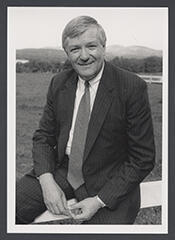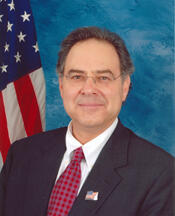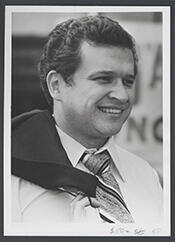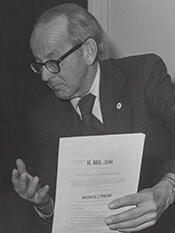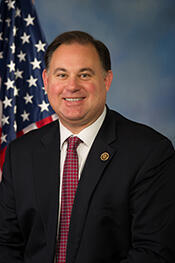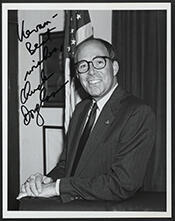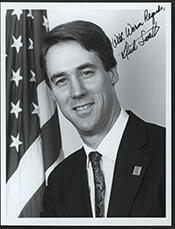
Richard Nelson Swett (born May 1, 1957) is an American politician, architect, and diplomat from the state of New Hampshire who served as the U.S. representative for New Hampshire’s 2nd congressional district from 1991 to 1995 and as United States Ambassador to Denmark from 1998 to 2001. A member of the Democratic Party, he contributed to the legislative process during two terms in the House of Representatives and later held prominent roles in public service, diplomacy, and the private sector.
Swett was born in Bryn Mawr, Pennsylvania, and moved with his family to New Hampshire as a child, establishing the long-term connection to the state that would later define his political career. He attended Yale University, where he completed his undergraduate education. During his time at Yale, he joined the Church of Jesus Christ of Latter-day Saints (LDS Church) community that would remain important in his personal and professional life. In 1980, he married Katrina Lantos, a future congressional candidate and the daughter of Congressman Tom Lantos; she had previously converted to the LDS Church while a student at Yale. The couple would go on to have seven children.
After graduating from Yale, Swett trained and worked as an architect, beginning his professional career in San Francisco. He became a practicing architect there before returning to New Hampshire. His architectural background later informed both his policy interests and his writing, particularly in the areas of design, leadership, and public infrastructure. Over time, his civic engagement and interest in public affairs led him to become active in the Democratic Party in New Hampshire, where he began building the political base that would support his entry into elective office.
Swett’s formal political career began with his successful run for Congress in 1990. He was elected to the United States House of Representatives in November 1990 as a Democrat representing New Hampshire’s 2nd congressional district, taking office on January 3, 1991. His service in Congress occurred during a significant period in American history, encompassing the end of the Cold War and the early post–Cold War years. As a member of the House of Representatives, he participated in the democratic process and represented the interests of his New Hampshire constituents on national issues. In the run-up to his 1990 campaign, former New Hampshire Governor Meldrim Thomson Jr. unsuccessfully challenged the use of the name “Dick Swett” on the ballot, arguing it was misleading because Swett was listed as “Lantos-Swett” in the telephone directory, voter registration, real estate deed, and business records. During his tenure, Swett took several notable legislative positions, including his 1994 vote in favor of a bill to ban assault weapons, a measure that passed the House by only two votes; his support for the ban resulted in numerous threats against his life. Among his supporters during this period was fellow Latter-day Saint Mitt Romney, who donated $250 to Swett’s 1992 congressional campaign; both men owned homes on Lake Winnipesaukee in New Hampshire. Swett was defeated in his bid for reelection in November 1994, ending his House service on January 3, 1995.
Following his departure from the House, Swett remained active in electoral politics. In 1996, he ran as the Democratic candidate for the Class 2 United States Senate seat from New Hampshire, challenging incumbent Republican Senator Bob Smith. Smith, known as one of the most conservative senators from the Northeast, faced a strong challenge from Swett in a year when President Bill Clinton’s reelection campaign had significant down-ballot influence. The race was close enough that on election night many American media outlets initially and incorrectly projected that Swett had won, but he ultimately was narrowly defeated. Despite this loss, Swett’s visibility in national Democratic circles increased, and he continued to be involved in policy and campaign work.
In 1998, President Bill Clinton appointed Swett as United States Ambassador to the Kingdom of Denmark. Swett served in Copenhagen from 1998 until 2001, representing U.S. interests in a key NATO ally during a period marked by evolving transatlantic relations and the lead-up to the post–Cold War expansion of international institutions. His ambassadorship drew on both his legislative experience and his international perspective shaped by his family’s ties to Europe through his father-in-law, Congressman Tom Lantos, a Holocaust survivor and leading voice on human rights. At the conclusion of his term as ambassador in 2001, Swett returned with his family to New Hampshire.
After his diplomatic service, Swett resumed and expanded his work in architecture and public policy. He returned to the field of architecture and became Managing Principal of the Washington, D.C., office of the international design firm Leo A. Daly. He later co-founded and served as chief executive officer of Climate Prosperity Enterprise Solutions, a firm focused on sustainable development and economic strategies related to climate and energy. In the political arena, he contributed to national policy formation, notably co-authoring, with Larry Coben, the national energy policy for Senator Joseph Lieberman’s 2004 presidential campaign. Swett also authored the book “Leadership by Design: Creating an Architecture of Trust,” published in 2005, which reflects his combined interests in leadership, design, and organizational culture.
In subsequent years, Swett remained engaged in civic and political reform efforts. He became a member of the ReFormers Caucus of Issue One, a bipartisan group of former elected officials dedicated to reducing the influence of money in politics and strengthening democratic institutions. Continuing his involvement in Democratic Party politics, on August 12, 2019, he publicly endorsed Joe Biden for President. Throughout his career, Swett has balanced roles as an architect, public official, diplomat, author, and advocate, maintaining active ties to New Hampshire, the LDS Church, and national public policy debates.
Congressional Record