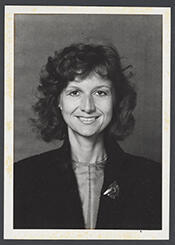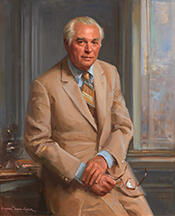
Robert A. Weygand (born May 10, 1948) is an American politician and landscape architect who served as a Democratic Representative from Rhode Island in the United States Congress from 1997 to 2001. Over two terms in the House of Representatives, he participated in the legislative process during a significant period in American history, representing the interests of his Rhode Island constituents and contributing to the work of the Democratic Party at the national level.
Weygand was born in Attleboro, Massachusetts, to Charles E. Weygand and Lillian M. (Kingsley) Weygand. He was raised in the region and attended St. Raphael Academy in Pawtucket, Rhode Island, for his high school education. He then enrolled at the University of Rhode Island, where he became a member of the Theta Chi fraternity. Demonstrating a broad range of academic interests over several decades, he earned a Bachelor of Fine Arts in Theater in 1971, followed by a Bachelor of Science in Civil and Environmental Engineering in 1976. Later in life, he returned to the University of Rhode Island to pursue graduate studies, receiving a Master of Arts in Political Science in 2009 and a Master of Public Administration in 2010.
Before entering high-level elective office, Weygand built a professional career in planning and landscape architecture. From 1973 to 1977, he worked as a landscape architect for the Rhode Island Department of Natural Resources. He then served as a city planner and landscape architect for a private architectural firm from 1977 to 1982. In 1982, he co-founded and became president of Weygand, Orchich, & Christie, Inc., an architectural and landscape architectural firm, a position he held until 1993. His professional accomplishments in the field were recognized nationally when he was elected a Fellow of the American Society of Landscape Architects in 1998.
Weygand’s public service began at the local level. He served as chairman of the East Providence Planning Board from 1978 to 1984, where he helped guide municipal planning and development policy. He was elected to the Rhode Island House of Representatives in 1984 and served there from 1985 to 1993. During his tenure as a state legislator, he became widely known for his role in exposing public corruption. In 1991, when then-Pawtucket Mayor Brian J. Sarault offered him a $2,000 bribe, Weygand reported the incident to the Rhode Island State Police and the Federal Bureau of Investigation. He agreed to cooperate with authorities, wearing listening equipment during a meeting with the mayor in Sarault’s office. After Weygand left the office, FBI agents entered and arrested the mayor. The evidence he provided helped send Sarault, several other city officials, and private vendors to prison, reinforcing Weygand’s reputation for integrity in public life.
In 1992, Weygand was elected the 65th Lieutenant Governor of Rhode Island, taking office in 1993 and serving until 1997. As lieutenant governor, he worked on issues related to economic development, government reform, and public policy coordination within the state’s executive branch. In 1996, he ran for and won an open seat in the United States House of Representatives from Rhode Island, succeeding Jack Reed, who was elected to the U.S. Senate. Weygand took his seat in Congress in January 1997 and served two terms, from 1997 until 2001. During his time in the House, he participated in the democratic process on behalf of Rhode Island, aligning with the Democratic Party on most issues while also being known as an anti-abortion Democrat, a stance that distinguished him within his party.
Weygand chose not to seek re-election to the House of Representatives in 2000. Instead, he ran for the United States Senate, challenging incumbent Republican Senator Lincoln Chafee. In that race, Weygand faced a difficult political landscape, as Chafee was highly popular among many Rhode Island Democrats and was regarded as one of the most liberal Republicans elected to national office. Weygand was defeated in the 2000 Senate election, and his service in Congress concluded in January 2001.
After leaving Congress, Weygand continued his career in public and higher education administration. In 2001, he was appointed President of the New England Board of Higher Education in Boston, where he worked on regional initiatives to improve access to and the quality of postsecondary education. In 2004, he stepped down from that position to become Vice President for Administration at the University of Rhode Island, returning to the institution where he had earned multiple degrees. In that role, he oversaw administrative and operational functions of the university. His tenure at the University of Rhode Island included, among other matters, the resolution of accrued benefits; upon leaving his post, he received a payment of $51,707 for unused vacation days, as reported by the Providence Journal.
Congressional Record