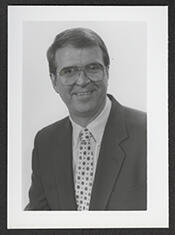
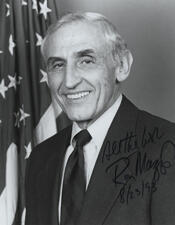
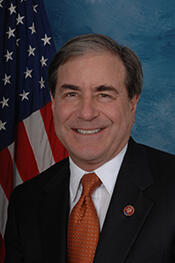
Ronald Edward Lewis (born September 14, 1946) is an American retired politician who served as a Republican member of the United States House of Representatives from 1993/1994 to 2009, representing Kentucky’s 2nd congressional district for eight terms. A member of the Republican Party, he contributed to the legislative process during a significant period in American history, participating in the democratic process and representing the interests of his constituents in central and western Kentucky.
Lewis was born in McKell, near South Shore, in Greenup County in far northeastern Kentucky. He graduated from McKell High School in 1964. He attended Morehead State University in Morehead, Rowan County, from 1964 to 1967 before transferring to the University of Kentucky in Lexington, where he earned a Bachelor of Arts degree in history and political science in 1969. Maintaining a strong interest in education, he returned to Morehead State University in 1980 and completed a master’s degree in professional education in 1981. Raised in a region with a strong Democratic tradition, Lewis developed an early interest in Republican politics that would shape his later public career.
At the age of twenty-one, Lewis worked on the successful 1967 gubernatorial campaign of Republican Louie B. Nunn of Glasgow. Following Nunn’s victory, Lewis received a state job and encouragement to seek office himself. In 1971 he ran, unsuccessfully, for the Kentucky House of Representatives from his native Greenup County, a campaign hampered by the strongly Democratic climate in the state that year but one that solidified his long-term involvement in GOP politics. In 1972 he served briefly in the United States Navy, attending Navy Officer Candidate School in Pensacola, Florida, but a kidney ailment led to a quick medical discharge. After leaving the Navy, Lewis worked in sales for several companies, including Ashland Oil, gaining private-sector experience before turning more fully to education and ministry.
Beginning in 1980, Lewis taught for five years at Watterson College in Louisville, Kentucky, a private vocational institution that later closed in the 1990s. That same year he was ordained as a Southern Baptist minister after study at the Southern Baptist Theological Seminary in Louisville. He served as pastor of the historic White Mills Baptist Church and, in the early 1980s, as pastor of Friendship Baptist Church outside Hodgenville. In 1985 he combined his religious vocation with entrepreneurship by opening the Alpha and Omega Bookstore, a religious bookstore in Elizabethtown, Kentucky. Throughout this period, he remained active in Republican politics and community affairs, building a local profile that would support his eventual congressional bid.
Lewis’s opportunity for national office arose in 1994, when he filed to run against longtime Democratic Representative William H. Natcher in the general election for Kentucky’s 2nd congressional district. The district was heavily Democratic in voter registration, and Natcher had held the seat since 1953 without serious difficulty, leading many observers to view Lewis, despite endorsements from state GOP leaders and U.S. Senator Mitch McConnell, as a “sacrificial lamb” candidate. The race changed dramatically when Natcher died in late March 1994, prompting a special election in May 1994. In that special election, Lewis faced State Senator Joe Prather of Hardin County. With support from national Republican organizations and social conservative groups, he ran a strong campaign in a district that had not elected a Republican in 129 years. He tied Prather to President Bill Clinton, who was unpopular in the district, and to a proposed tax increase on tobacco, a staple crop in Kentucky, while emphasizing the socially conservative leanings of the electorate. Lewis won the special election with 55 percent of the vote to Prather’s 45 percent in an election with less than 20 percent turnout, an upset that many political analysts, including Larry J. Sabato in his “Crystal Ball” newsletter, viewed as an early sign of the Republican wave that would sweep Congress later that year. He was elected to a full term in November 1994, defeating Democrat David Adkisson with 60 percent of the vote.
During his tenure in the House of Representatives, which extended from his initial special-election victory in 1993/1994 until January 2009, Lewis was reelected repeatedly in a district that became reliably Republican at the federal level. He won a second full term in 1996 with 58 percent of the vote, defeating former Kentucky Senate floor leader Joe Wright by a margin of 125,433 to 90,483. He continued to consolidate his position, and in the 2004 election he defeated Democrat Adam Smith with 68 percent of the vote. He did not face another serious challenge until 2006, when he was opposed by retired U.S. Army Colonel Mike Weaver, a former member of the Kentucky House of Representatives; Lewis prevailed with 55 percent of the vote, the closest race he had faced in a decade. Over the course of his eight terms, he served on the powerful House Ways and Means Committee, including its Subcommittee on Social Security and Subcommittee on Trade, and participated in the Republican Policy Committee, giving him influence over tax, entitlement, and trade policy.
Lewis entered Congress as part of the Republican insurgency of the mid-1990s and made government reform a central theme of his early campaigns. A key element of his 1994 campaign was a pledge to support term limits for members of Congress. He was one of five Republicans who signed a pledge committing themselves to a limited number of terms if elected and personally promised to leave the House in 2003, after serving four full terms plus the remainder of Natcher’s term. In 1998, however, he informed approximately 3,000 constituents by letter that he had changed his mind and intended to run again in 2002 and beyond, later telling the Elizabethtown News-Enterprise that he had “made a mistake in 1994” with his earlier pledge. According to the non-partisan website TheMiddleClass.org, Lewis consistently voted against tax increases and the expansion of social programs, aligning himself with fiscal conservatism. In 2004 he joined numerous Republican colleagues in sponsoring legislation that would allow Congress, by a two-thirds vote of both the House and Senate, to override certain Supreme Court decisions, which he likened to the existing constitutional authority of Congress to override a presidential veto with a two-thirds majority.
On January 29, 2008, the filing deadline for the 2008 elections in Kentucky, Lewis announced that he would not seek reelection, thereby declining to run for an eighth full term. His decision, made public at the last possible moment, was intended to clear the way for his chief of staff, Daniel London, to secure the Republican nomination; however, State Senator Brett Guthrie also filed for the race. The timing of the announcement surprised and angered many prominent Kentucky Republicans. Lewis stated that he was weary of dividing his time between Washington and Kentucky and that serving in Congress had become less encouraging after Democrats regained the House majority in 2007. On the Democratic side, State Senator David Boswell of Daviess County and Daviess County Judge-Executive Reid Haire filed for the nomination. Guthrie ultimately won the Republican primary over London and went on to defeat Boswell in the general election, succeeding Lewis in representing the 2nd district when Lewis left office in January 2009.
In his later life, Lewis remained involved in Republican politics and public affairs in Kentucky. In 2010 he endorsed Kentucky Secretary of State Trey Grayson in the Republican primary to succeed retiring U.S. Senator Jim Bunning; Grayson lost the nomination to Rand Paul, who went on to win the Senate seat. Lewis deposited his congressional papers at Baptist-affiliated Campbellsville University, preserving a record of his legislative career for research and public reference. A Southern Baptist by faith, he has continued to be identified with religious and conservative causes in the state. Lewis has been married to Kayi Gambill Lewis since 1966; they reside in Cecilia, near Elizabethtown, Kentucky, and have two children.
Congressional Record