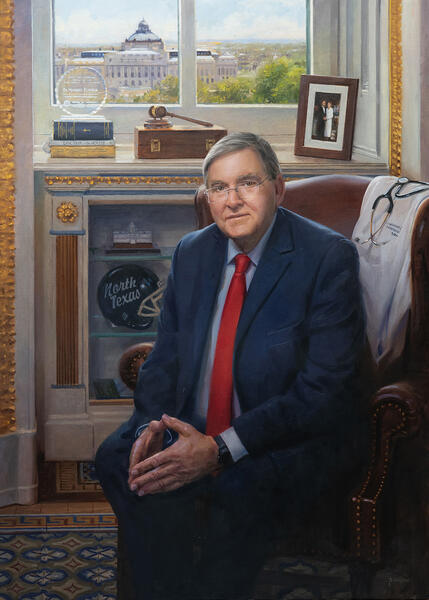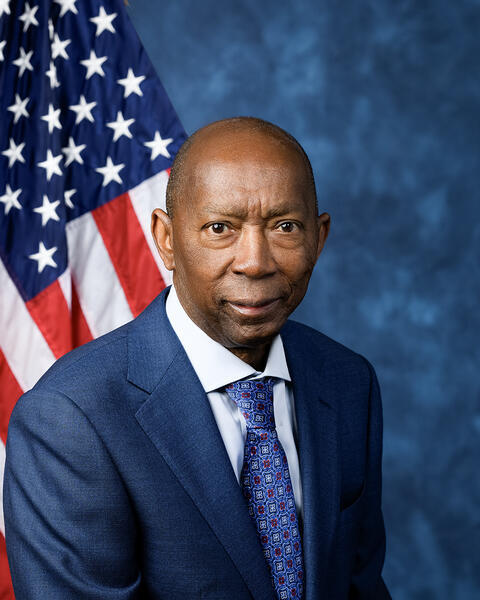
Sylvester Turner (September 27, 1954 – March 5, 2025) was an American politician and attorney who rose from modest beginnings in Houston, Texas, to become a long-serving state legislator, the 62nd mayor of Houston, and a member of the United States House of Representatives. Born in Houston as the sixth of nine children to Eddie Turner, a commercial painter, and Ruby Mae Turner, he was raised in the northwest Houston community of Acres Homes. His father died when he was 13, after which his mother worked as a maid at the Rice Hotel in downtown Houston. Turner later credited her perseverance and optimism as formative influences on his character and public service ethos, shaping his commitment to working families and underserved communities.
Turner attended Klein High School in Harris County, Texas, which had been an all-white school until Black students, including Turner, were bused there as part of desegregation efforts. At Klein, he excelled academically and in leadership, serving as student body president, earning recognition as a debate champion, and graduating as valedictorian. He went on to the University of Houston, where he studied political science, served as Speaker of the Student Senate, and graduated magna cum laude in 1976 with a Bachelor of Arts degree. Inspired from a young age by the television series “Perry Mason” and determined to pursue a legal career, Turner enrolled at Harvard Law School. There he was a finalist in the Ames Moot Court Competition and received his Juris Doctor degree in 1980. He was initiated into the Alpha Eta Lambda chapter of Alpha Phi Alpha fraternity in Houston, reflecting his early engagement in civic and professional networks.
After completing his legal education, Turner joined the Houston-based law firm Fulbright & Jaworski. In 1983, he co-founded the law firm of Barnes & Turner with Barry M. Barnes, specializing in corporate and commercial law while also serving for many years as an immigration lawyer in Houston. He extended his professional work into legal education as an adjunct professor at the Thurgood Marshall School of Law and as a seminar lecturer at South Texas College of Law and the University of Houston Law Center’s Continuing Legal Education programs. Turner first sought public office in 1984, running unsuccessfully in the Democratic primary for Harris County Commissioner, Precinct 1, losing to El Franco Lee. Four years later, in 1988, he was elected to the Texas House of Representatives from House District 139 in Harris County, taking office in January 1989 and serving more than 25 years, remaining in the Texas House until 2016. During this period he ran unsuccessfully for mayor of Houston in 1991 and 2003; his 1991 mayoral campaign was overshadowed by an investigative report by Wayne Dolcefino of KTRK-TV alleging involvement in an insurance fraud scheme. Turner sued Dolcefino and KTRK and initially won a $5.5 million libel verdict, later reduced to $3.25 million, but the judgment was reversed by the Court of Appeals and that reversal was upheld by the Texas Supreme Court, which found he had not proven malice under First Amendment standards, even while both courts found the broadcasts false and defamatory.
In the Texas House of Representatives, Turner became a prominent budget and policy leader. He served on the Legislative Budget Board; as Vice-Chairman of the House Appropriations Committee; as Chairman of the Subcommittee on Articles 1, 4, and 5 (General Government, Judiciary, Public Safety and Criminal Justice); and as Chair of the House State Affairs Committee. He also chaired the Texas Legislative Black Caucus and the Greater Houston Area Legislative Delegation. Turner supported policies to attract doctors to underserved areas, successfully proposed a measure increasing state funding for mental health services in Harris County from $32 million to $200 million, and worked to increase funds for legal aid for low-income Texans. A supporter of the federal Affordable Care Act, he voted against Texas joining the Interstate Health Care Compact and introduced legislation to expand Medicaid under the ACA, warning colleagues of the financial and political consequences of refusing federal funds. He helped expand access to the Children’s Health Insurance Program in legislation passed in 2007 and in 2015 advanced measures to free up funding for medical trauma care centers. During the 83rd and 84th legislative sessions, he authored and supported legislation to strengthen Medicaid coverage for people with severe and persistent mental illness transitioning from institutions to community settings and worked to protect public education funding, voting against large-scale cuts, benefit reductions for future public school employees, and measures that would have allowed school districts to lower salaries, implement furloughs, and increase student–teacher ratios. He also opposed a corporate tax break he and others believed would undermine public school finance.
Turner was an influential voice on utility regulation and consumer protection in Texas. In 1999, he voted to restructure the state’s electric utility industry to introduce competition and consumer choice, while simultaneously supporting safeguards for ratepayers. He voted for bills preventing gas companies from cutting off service during freezing temperatures, limiting utilities’ ability to raise rates for major projects without regulatory approval, and requiring the Public Utility Commission to conduct cost–benefit analyses of proposals that would add more than $100 million annually to consumer electricity costs. He authored legislation to prohibit electricity companies from charging “minimum usage fees” to customers who used very little electricity and supported granting the Public Utility Commission emergency cease-and-desist authority over companies whose actions threatened the state’s electricity supply. Turner joined efforts to enroll low-income Texans in the “LITE-UP Texas” discount program and authored legislation to extend that program through 2017, while co-authoring a bill to ensure residents of multi-family housing received timely notice when electricity bills were unpaid. His legislative record also included opposition to scaling back retirement benefits for future public school employees and criticism of large bonus payments to Teachers Retirement System investment managers during periods of budget cuts and weak investment performance.
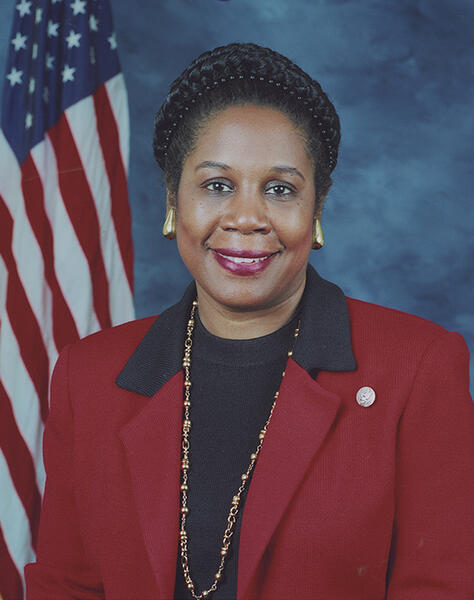
In 2015, Turner was elected mayor of Houston, winning the December 2015 runoff against Bill King after receiving 31 percent of the vote in the initial round, in what became the closest mayoral election in the city’s history. He took office as the 62nd mayor of Houston in 2016 and was re-elected on December 14, 2019, defeating challenger Tony Buzbee by a wide margin, serving a full eight-year tenure that concluded on January 1, 2024. As mayor, Turner emphasized Houston’s identity as a diverse, immigrant-friendly city. In 2016, he signed Houston onto the Welcoming America network, formally designating it a “Welcoming City” and strengthening the city’s Office of New Americans and Immigrant Communities. That same year, the Obama White House recognized Houston with a presidential letter of recognition for its participation in the Building Welcoming Communities Campaign, and Turner received the Ohtli Award, the Mexican government’s highest honor, for his support of Houston’s Mexican community. He partnered with the Mexican Consulate and local nonprofits to host citizenship forums, legal clinics, and health fairs, and he publicly reassured immigrant families during Hurricane Harvey in 2017 and the COVID-19 pandemic that they could seek emergency assistance without fear of immigration enforcement. He opposed Texas Senate Bill 4 in 2017, affirming that Houston police would not serve as immigration agents and that the city would not assist federal immigration authorities in conducting raids, even as state law prohibited so-called sanctuary cities. In 2021, under his administration, Houston’s Office of New Americans and Immigrant Communities worked with nonprofits and faith-based groups to establish the city’s first Family Transfer Center for newly arrived migrants, capable of serving up to 500 asylum-seeking families per day during what officials described as the largest influx of migrants in the city’s history. Turner also engaged in broader humanitarian efforts, including helping victims of Hurricane Maria in Puerto Rico in October 2017. His mayoralty drew criticism in several areas, including his decision not to recommend evacuation ahead of Hurricane Harvey, which he defended by citing the dangers and logistical challenges of evacuating millions of residents, and concerns about the city’s fiscal condition at the end of his tenure, when Houston was spending an estimated $100 to $200 million more annually than it was taking in. In the 2023 Houston mayoral election, he endorsed U.S. Representative Sheila Jackson Lee as his preferred successor; she lost the December runoff by nearly 30 percentage points.
Turner’s policy positions as mayor reflected continuity with his legislative priorities. He supported stricter regulations on Uber and other ridesharing services in 2016 and remained an advocate for civil rights and equality, declaring himself “100 percent” committed during the 2015 mayoral runoff to reenacting the Houston Equal Rights Ordinance (HERO) and criticizing opponent Bill King for refusing to revisit the issue. He continued to participate in public health initiatives, including programs related to COVID-19 safety and community-based health care. When his term as mayor ended on January 1, 2024, Turner returned to electoral politics at the federal level. Following the death of Sheila Jackson Lee in 2024, which vacated Texas’s 18th congressional district, he announced his candidacy in the Democratic primary to fill her seat and was nominated at the subsequent party convention. He won the November 2024 election and took office as the U.S. representative for Texas’s 18th congressional district in January 2025. As a member of the Democratic Party, Sylvester Turner served as a Representative from Texas in the United States Congress from 2025 to 2025, contributing to the legislative process during one term in office. His service in Congress occurred during a significant period in American history; as a member of the House of Representatives, he participated in the democratic process and represented the interests of his constituents while serving on the House Committee on Homeland Security and the House Committee on Science, Space, and Technology.
Turner’s congressional tenure was brief, as it was cut short by his death in office. On the evening of March 4, 2025, he attended President Donald Trump’s speech to a joint session of Congress in Washington, D.C. In the early morning hours of March 5, 2025, Sylvester Turner died while still serving in the United States House of Representatives. His death ended a public career that had spanned more than three decades in elected office, from his initial election to the Texas House of Representatives in 1988, through his eight years as mayor of Houston, to his final months representing Texas’s 18th congressional district in Congress.
Congressional Record