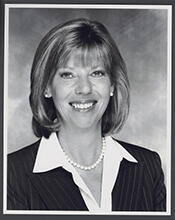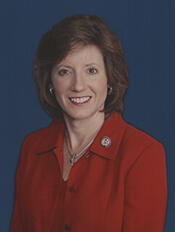
Vicky Jo Hartzler (née Zellmer; born October 13, 1960) is an American politician, educator, and businesswoman who served as the U.S. representative for Missouri’s 4th congressional district from January 3, 2011, to January 3, 2023. A member of the Republican Party, she previously served as the Missouri state representative for the 124th district from 1995 to 2001. Over six terms in the U.S. House of Representatives, Hartzler contributed to the legislative process during a significant period in American history, participating in the democratic process and representing the interests of a largely rural, western-central Missouri constituency.
Hartzler was raised on a farm near Archie, a rural community south of Kansas City, Missouri. Growing up in an agricultural setting, she developed early familiarity with farming and rural life that would later inform much of her legislative focus. She graduated from Archie High School and went on to attend the University of Missouri, where she graduated summa cum laude with a Bachelor of Science degree in education. She continued her studies at the University of Central Missouri, earning a Master of Science degree in education. Her academic training in education, combined with her rural upbringing, shaped both her early professional career and her later policy priorities.
Before entering elective office, Hartzler worked as a high school home economics teacher for 11 years, teaching family and consumer sciences and gaining firsthand experience with public education in Missouri. She and her husband also operated a family-owned agricultural and farm equipment business, which further grounded her in the concerns of small business owners and farmers. In 2000, she and her husband adopted a baby daughter, a family decision that influenced the timing of her departure from state legislative service.
Hartzler’s political career began in the Missouri House of Representatives, where she was elected in 1994 to represent the 124th district. She served in the state legislature from 1995 to 2001. During her tenure, she took conservative positions on social issues, including opposition to the Equal Rights Amendment; in 2000 she led a group of legislators in a rally against the ERA, stating that she did not “want women used to pass a liberal agenda.” After leaving the Missouri House in 2000, she remained active in public policy and advocacy. In 2004, she served as state spokeswoman for the Coalition to Protect Marriage, which supported a constitutional amendment to ban same-sex marriage in Missouri. In 2005, Governor Matt Blunt appointed her chair of the Missouri Women’s Council, a position she held for two years, further elevating her profile in state-level Republican politics.
After nearly a decade out of elected office, Hartzler reentered politics in 2010 by running for Congress in Missouri’s 4th congressional district, then represented by 17-term Democratic incumbent Ike Skelton. At that time, the district had long been considered a Democratic stronghold at the congressional level, even as it trended Republican in presidential and state legislative races. Hartzler ran on a conservative platform emphasizing tax cuts, spending cuts, and opposition to abortion and same-sex marriage. She won a seven-way Republican primary with 40 percent of the vote and went on to defeat Skelton in the November 2, 2010, general election with 50.43 percent of the vote. Her victory made her the first Republican to represent the district since 1955 and only the second since the Great Depression. She was also the second Republican woman elected to Congress from Missouri, after Jo Ann Emerson, and the first not elected as a successor to her husband.
In Congress, Hartzler represented a district that initially stretched from the state capital, Jefferson City, westward to exurban areas of Jackson County near Kansas City. Following redistricting after the 2010 U.S. Census, the 4th district’s boundaries were significantly altered. The district lost Cole, Lafayette, Ray, and Saline counties, as well as its shares of Jackson and Webster counties, and gained all of Boone, Cooper, Howard, and Randolph counties, part of Audrain County, and the remainder of Cass County, including Cass County’s portion of Kansas City. Over the course of her tenure, the district comprised a large swath of western-central Missouri anchored in Columbia and stretching to the eastern and southern Kansas City suburbs, including a sliver of Kansas City, and encompassing communities such as Sedalia, Warrensburg, Moberly, and Lebanon. Hartzler consistently won reelection by wide margins, including primary contests in which she received more than 70 percent of the Republican vote and general elections in which she prevailed by more than two-to-one over her Democratic opponents.
Throughout her House service from 2011 to 2023, Hartzler was an active member of several key committees and caucuses. She served on the House Committee on Agriculture, including the Subcommittee on Biotechnology, Horticulture, and Research and the Subcommittee on Livestock and Foreign Agriculture, where she became a senior member. She also served on the House Committee on Armed Services, rising to the position of ranking member of the Subcommittee on Tactical Air and Land Forces and serving on the Subcommittee on Seapower and Projection Forces. Her caucus memberships included the Republican Study Committee, the Congressional Cement Caucus, the Congressional Taiwan Caucus, the Veterinary Medicine Caucus, and the United States Congressional International Conservation Caucus. In her legislative work, she focused on defense policy, agricultural issues, and rural economic development, while maintaining socially conservative positions. At a town hall meeting in Missouri on April 5, 2012, she publicly expressed doubts about President Barack Obama’s birth certificate, aligning herself with elements of the “birther” movement at that time.
Hartzler was a vocal opponent of abortion and a prominent critic of Planned Parenthood. She sponsored legislation aimed at blocking taxpayer dollars from funding clinics that offer abortion services and supported measures such as the Pain-Capable Unborn Child Protection Act. In October 2015, she was appointed to the House Select Investigative Panel on Planned Parenthood, which examined fetal tissue procurement and related practices. On agricultural and rural policy, she played a significant role in shaping farm and nutrition legislation. In September 2013, she voted for a $39 billion reduction in Supplemental Nutrition Assistance Program (SNAP) benefits, a measure that was separated from legislation to increase farm subsidies for the first time in more than three decades. As a senior member of the House Agriculture Committee, she served as a conferee on the 2018 Farm Bill, helping to negotiate the final compromise. Although she did not cast a vote on the bill’s final passage in December 2018 due to the death of her father, President Donald Trump signed the legislation into law that month.
A major focus of Hartzler’s later congressional work was expanding rural broadband access. Within the jurisdiction of the House Agriculture Committee, she successfully advanced provisions that Trump signed into law to increase private investment in rural broadband infrastructure. These measures modified the Department of Agriculture’s Rural Utilities Service broadband programs to include loan guarantees in addition to existing direct loans. She also led efforts to raise the minimum broadband speeds required of companies receiving Rural Utilities Service financing, increasing minimum download speeds from 4 to 25 megabits per second and tripling minimum upload speeds to 3 megabits per second. In 2020, in response to the economic disruptions caused by the COVID-19 pandemic, she introduced legislation to allow certain Rural Utilities Service borrowers to refinance or take advantage of low interest rates without incurring heavy fines and penalties, aiming to provide financial relief and encourage continued investment in rural infrastructure.
In 2022, rather than seek another term in the House, Hartzler ran for the U.S. Senate seat from Missouri being vacated by retiring Senator Roy Blunt. Entering a crowded Republican primary field, she campaigned on her record as a social conservative and advocate for rural Missouri. Despite her decade-long tenure in Congress and statewide name recognition, she lost the Republican primary to Missouri Attorney General Eric Schmitt. Her service in the U.S. House concluded on January 3, 2023, marking the end of six consecutive terms in Congress during which she represented Missouri’s 4th congressional district and played a notable role in national debates over defense, agriculture, social policy, and rural development.
Congressional Record