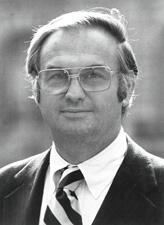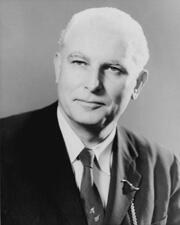
William Arthur Purtell (May 6, 1897 – May 31, 1978) was an American businessman and Republican politician who represented Connecticut in the United States Senate in 1952 and from 1953 to 1959. Over the course of two terms in office, he contributed to the legislative process during a significant period in American history, participating in the democratic process and representing the interests of his Connecticut constituents.
Purtell was born on May 6, 1897, in a tenement neighborhood of Hartford, Connecticut, the son of Thomas Michael and Nora Mary (née O’Connor) Purtell, both of whom were tobacco workers. He received his early education at St. Patrick’s School in Hartford and then attended Hartford Public High School for two years before leaving school at the age of fifteen. To help support himself and his family, he worked in a series of modest jobs, including as a janitor, water boy, and car checker for the New York, New Haven and Hartford Railroad. These early experiences in a working-class environment shaped his understanding of labor and industry, which later informed his business and political career.
During World War I, Purtell served in the United States Army, joining the American Expeditionary Forces in France. He was assigned to the radio section, reflecting the growing importance of communications technology in modern warfare, and was discharged with the rank of corporal in 1919. That same year, he married Katherine Elizabeth Cassidy. The couple had two children, a son, William, and a daughter, Margaret. After his military service, Purtell spent roughly a decade working as a salesman, gaining experience that would prove valuable when he moved into manufacturing and corporate leadership.
Purtell emerged as a prominent industrialist in Connecticut during the interwar and postwar years. In 1929, he co-founded the Holo-Krome Screw Corporation of West Hartford, a manufacturing firm that became a significant enterprise in the region. He served as its president, treasurer, and general manager from its founding until 1952. In addition, he held top executive positions in other manufacturing concerns: from 1937 to 1944 he was president, treasurer, and general manager of the Billings & Spencer Company of Hartford, and from 1944 to 1947 he served as its chairman. From 1938 to 1952, he was vice president, treasurer, and general manager of the Sparmal Engineering Corporation. Beyond his corporate roles, Purtell was active in civic affairs, serving as a director of the Hartford Red Cross and as one of the executive directors of the Connecticut State Prison, reflecting his engagement with public service and community institutions even before holding elective office.
Purtell’s formal political career began in statewide Republican politics. In 1950, he sought the Republican nomination for Governor of Connecticut but was unsuccessful, losing to Congressman John Davis Lodge. Despite this setback, he remained an influential party figure and was among the first political leaders in Connecticut to support General Dwight D. Eisenhower’s presidential candidacy in 1952. His alignment with Eisenhower’s moderate Republicanism and his reputation as a successful businessman positioned him as a strong candidate for higher office.
In May 1952, Purtell won the Republican nomination to challenge Democratic incumbent William Benton for a United States Senate seat from Connecticut. That summer, an unusual political circumstance elevated his profile further. When Connecticut’s other Democratic senator, Brien McMahon, died in July 1952, Governor John Davis Lodge appointed Purtell to the Senate to fill the remainder of McMahon’s term. As a result, Purtell simultaneously held one Senate seat by appointment while running for election to the other. Fellow Republican businessman Prescott Bush, father of future President George H. W. Bush and grandfather of future President George W. Bush, was later elected to complete McMahon’s term. During his campaign against Benton, Purtell strongly supported Eisenhower’s national platform focused on “Communism, corruption, and Korea.” Benton criticized him as being so conservative that he “makes Bob Taft look like a left-wing New Dealer,” but Purtell prevailed in the general election, defeating Benton by 88,788 votes and securing 52 percent of the vote. He thus represented Connecticut in the United States Senate in 1952 by appointment and then from 1953 to 1959 by election.
During his tenure in the Senate, Purtell served through a period marked by the early Cold War, McCarthyism, and the beginning of the civil rights era. He co-sponsored an amendment to federal labor laws that designated discrimination by employers or labor organizations as an unfair labor practice, reflecting his interest in labor relations and fair employment standards. In 1954, he publicly supported the Eisenhower administration’s proposal requiring a government-conducted vote before a union could go on strike, a measure intended to regulate labor disputes and ensure broader worker consent. Purtell also voted in favor of the Civil Rights Act of 1957, the first major federal civil rights legislation since Reconstruction, aligning himself with efforts to strengthen voting rights and federal enforcement of civil rights protections. Despite his legislative record and his role in advancing key elements of the Eisenhower agenda, Purtell was defeated for reelection in 1958 by Democrat Thomas J. Dodd, a former congressman and future father of Senator Christopher J. Dodd. In that election, Purtell received approximately 42 percent of the vote to Dodd’s 57 percent, bringing his Senate career to a close in January 1959.
After leaving the Senate, Purtell returned to private life and resumed his manufacturing and business interests in Connecticut, drawing on the extensive industrial experience he had accumulated before entering national politics. He remained a respected figure in Republican circles and in the state’s business community, though he did not again hold public office. William Arthur Purtell died at his home in West Hartford, Connecticut, on May 31, 1978, at the age of 81. He was buried in Fairview Cemetery, leaving a legacy as a self-made industrialist who rose from modest beginnings to serve in the United States Senate during a transformative era in American political and social history.
Congressional Record